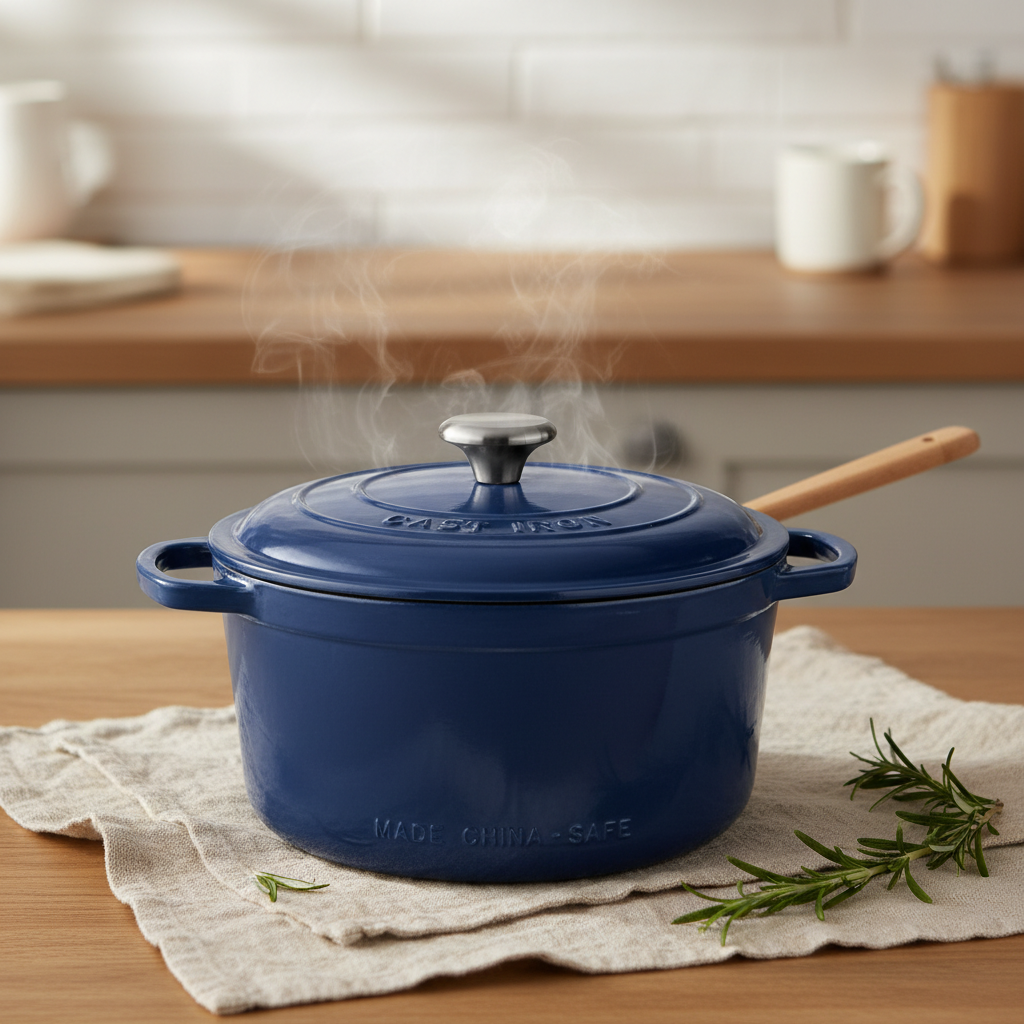
Choosing the right cast iron pan can revolutionize your cooking experience. From searing steaks to baking cornbread, a well-chosen pan offers unparalleled versatility and durability. Understanding the nuances of different cast iron options – from seasoned to enameled, different weights, and manufacturing processes – is crucial for maximizing its potential. This guide will delve into the essential factors to consider when you’re deciding how to choose cast iron pan, ensuring you select a pan that will last a lifetime.
The global popularity of cast iron cookware has experienced a resurgence in recent years, driven by a desire for sustainable, long-lasting kitchen tools and a move towards more traditional cooking methods. According to recent market reports, the cast iron cookware market is projected to reach significant growth in the next decade, fueled by increasing consumer awareness of its benefits. Selecting the optimal pan isn't just a culinary choice; it's an investment in quality and a step towards reducing reliance on disposable cookware.
However, with a wide array of options available, many consumers struggle with how to choose cast iron pan. Considerations extend beyond simply picking a size; factors like material composition, surface texture, and brand reputation all play a critical role in the pan's performance and longevity. This guide provides a comprehensive overview to navigate the selection process confidently.
Understanding Cast Iron Types
There are primarily three types of cast iron: traditional seasoned cast iron, enameled cast iron, and machine-made cast iron. Traditional cast iron requires seasoning – a process of baking oil into the surface to create a natural, non-stick coating. Enameled cast iron is coated with porcelain enamel, eliminating the need for seasoning and making it easier to clean. Machine-made cast iron, while more affordable, often lacks the smoothness and durability of hand-poured options. Knowing these differences is the first step in how to choose cast iron pan.
The manufacturing process also significantly impacts quality. Hand-poured cast iron, though more expensive, generally produces a smoother surface and more consistent heat distribution, resulting in superior cooking performance. The porosity of the cast iron and its ability to retain heat are also critical elements to consider, depending on your intended cooking style.
Weight and Thickness Considerations
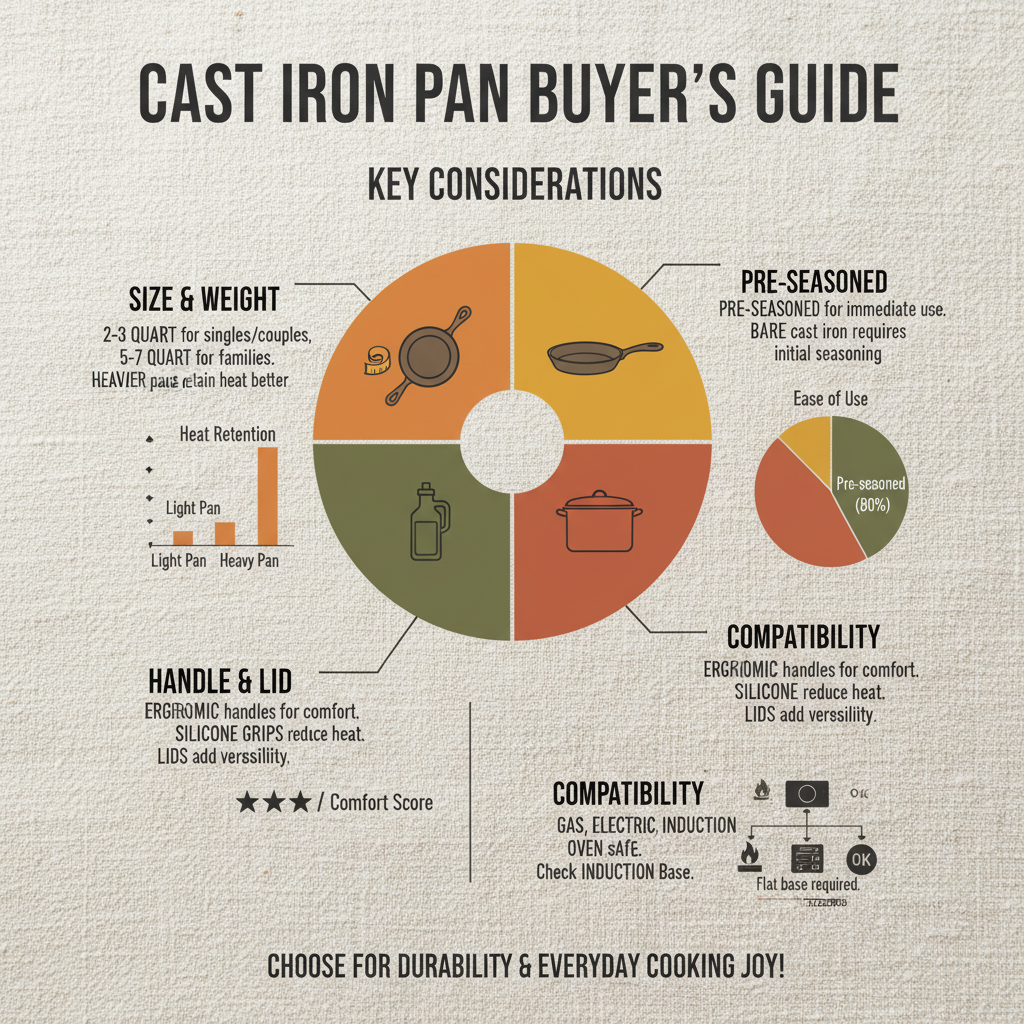
The weight of a cast iron pan is a significant factor, especially for everyday use. Heavier pans retain heat more effectively, making them ideal for searing and high-heat cooking. However, they can be cumbersome to maneuver, particularly when full of food. Thinner pans heat up more quickly but may not distribute heat as evenly. The ideal weight and thickness depend on your cooking style and physical strength.
Typically, a pan between 8 and 12 pounds is a good compromise between heat retention and manageability. For stovetop cooking, a thickness of around ¼ inch is generally sufficient, while pans intended for oven use or high-heat searing may benefit from a thicker base. How to choose cast iron pan also means understanding how its weight will affect your cooking process.
Consider the size of your burners and oven racks as well. A pan that's too large may not fit comfortably, reducing its effectiveness. Conversely, a pan that’s too small may not provide enough cooking surface for your needs.
Seasoning and Surface Quality
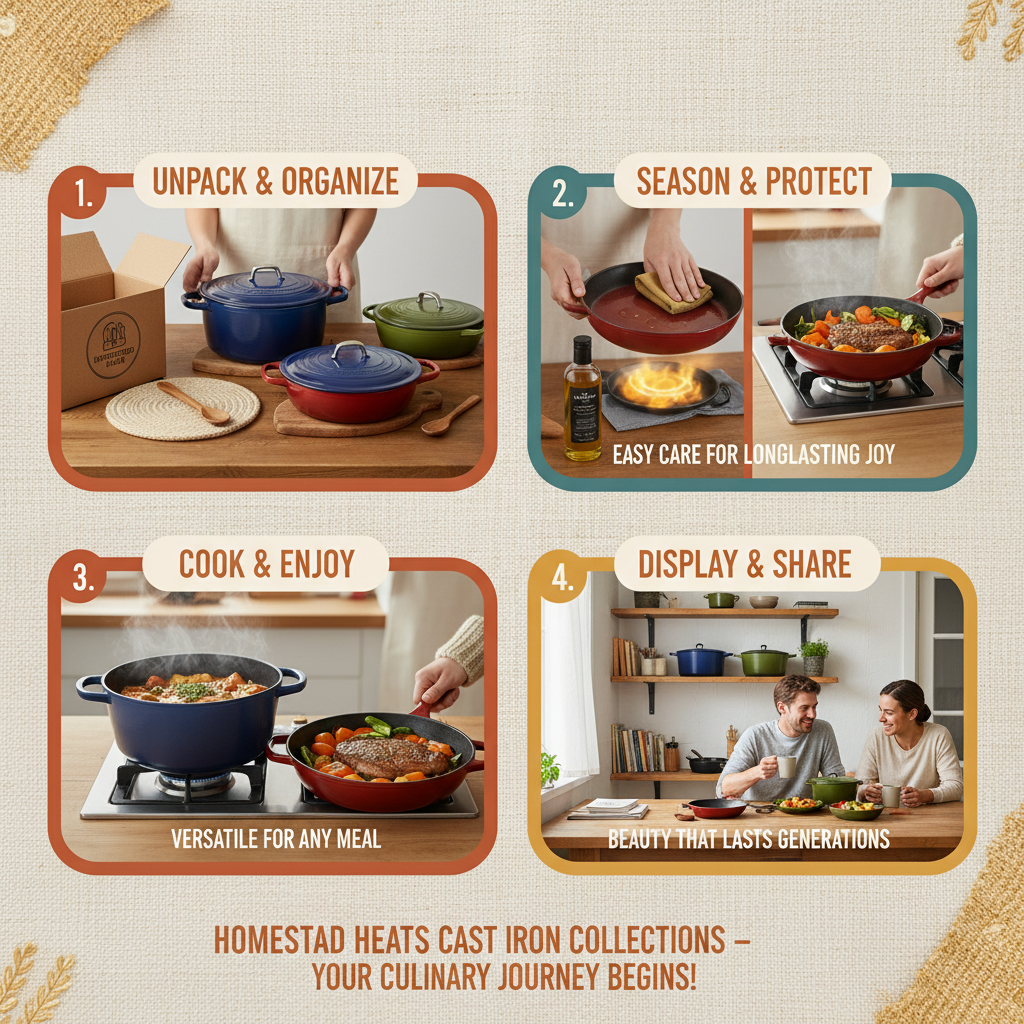
Seasoning is the key to a non-stick cooking surface on traditional cast iron. A well-seasoned pan will prevent food from sticking and make cleanup much easier. The quality of the initial seasoning can vary significantly between brands and even individual pans. You can also re-season a pan yourself to build up the coating over time.
The smoothness of the cooking surface is also crucial. Rough surfaces can cause food to stick even with proper seasoning. Look for pans with a finely textured surface, or be prepared to smooth it out yourself through repeated seasoning and use. Proper seasoning is fundamental to making the correct decision about how to choose cast iron pan.
Enameled cast iron eliminates the need for seasoning, but the enamel coating can chip or crack over time if not properly cared for. Inspect the enamel carefully for any imperfections before purchasing.
Handle Design and Ergonomics
The handle design significantly impacts the comfort and safety of using a cast iron pan. Look for handles that are securely attached to the pan and provide a firm grip, even when wet. Some pans have ergonomic handles designed to reduce strain on the hand and wrist.
Consider the shape and size of the handle, ensuring it’s comfortable for you to hold and maneuver. Some handles are solid cast iron, while others have a composite or silicone grip for added comfort and heat resistance.
Handle Comfort Ratings for Different Cast Iron Pans
Brand Reputation and Warranty
Established brands with a strong reputation for quality often offer more consistent products and better customer support. Consider brands like Lodge, Staub, Le Creuset, and Field Company, all of which are known for producing high-quality cast iron cookware.
A good warranty can provide peace of mind, protecting you against manufacturing defects or issues with the pan's performance.
Price Range and Value
Cast iron pans vary significantly in price, depending on the brand, size, type, and manufacturing process. Basic, machine-made pans can be found for under $50, while high-end, hand-poured enameled cast iron can cost several hundred dollars.
Focus on value rather than simply the lowest price. A well-made pan that will last a lifetime is a better investment than a cheaper pan that needs to be replaced frequently. Before you determine how to choose cast iron pan, consider your budget and intended use.
Don't be afraid to shop around and compare prices from different retailers. Sales and promotions can often help you save money on a high-quality pan.
Cleaning and Maintenance
Proper cleaning and maintenance are essential for preserving the lifespan of your cast iron pan. Avoid using soap, as it can strip away the seasoning. Instead, rinse the pan with hot water and scrub gently with a non-abrasive brush or sponge.
Dry the pan thoroughly after washing and lightly oil it to prevent rust. For stubborn food residue, you can use a chainmail scrubber or boil water in the pan to loosen the debris.
Regular seasoning will help maintain the non-stick surface and protect the pan from rust. With proper care, a cast iron pan can become a cherished heirloom, passed down through generations.
A Comparison of Cast Iron Pan Cleaning Methods
| Cleaning Method |
Effectiveness |
Impact on Seasoning |
Ease of Use |
| Hot Water & Brush |
7/10 |
Minimal |
10/10 |
| Chainmail Scrubber |
9/10 |
Low |
8/10 |
| Boiling Water |
6/10 |
Minimal |
7/10 |
| Salt Scrub |
8/10 |
Moderate |
6/10 |
| Dish Soap (Avoid) |
10/10 |
High |
10/10 |
| Abrasive Scrubber (Avoid) |
10/10 |
Very High |
7/10 |
FAQS
Seasoned cast iron requires regular oiling to maintain a non-stick surface and prevent rust. Enameled cast iron has a porcelain coating, eliminating the need for seasoning, but the enamel can chip over time. Choosing between the two depends on your preference for maintenance and cooking style.
To season a cast iron pan, apply a thin, even coat of oil (like flaxseed, vegetable, or canola) to the entire surface, then bake it upside down in a 350-400°F oven for an hour. Repeat this process several times to build up a strong seasoning.
No, it's best to avoid putting cast iron in the dishwasher. The harsh detergents and high heat can strip away the seasoning and cause the pan to rust. Handwashing with warm water and a gentle brush is recommended.
To remove rust, scrub the pan with steel wool or a wire brush to remove the rust, then wash it with soap and water. Re-season the pan thoroughly after removing the rust to prevent it from returning.
The ideal size depends on your cooking needs. A 10-12 inch pan is versatile for most tasks, while a smaller 8-inch pan is good for individual servings. Larger pans are suitable for cooking for a crowd.
Enameled cast iron is easier to clean and doesn’t require seasoning, making it a convenient option for some cooks. However, it's more expensive and the enamel can chip. It’s a good choice if you prioritize convenience and aesthetics.
Conclusion
Choosing the right cast iron pan is an investment in a versatile, durable, and timeless cooking tool. By considering factors like pan type, weight, seasoning, handle design, brand reputation, and cleaning requirements, you can select a pan that perfectly suits your needs and cooking style. Understanding these nuances is essential to confidently answering the question of how to choose cast iron pan.
A well-maintained cast iron pan can last for generations, becoming a cherished family heirloom. Don’t hesitate to explore different options and find a pan that you’ll enjoy using for years to come. Visit our website at www.zdcookware.com to explore our wide selection of high-quality cast iron cookware and learn more about caring for your investment.