Choosing a cast iron skillet is a culinary journey back in time, yet remarkably relevant in the modern kitchen. For centuries, this robust cookware has been prized for its durability, versatility, and ability to impart unique flavors to food. Understanding the nuances of selecting the right cast iron skillet – from material composition to seasoning and maintenance – can dramatically enhance your cooking experience and result in meals enjoyed for generations. This is more than just picking a pan; it’s investing in a legacy of cooking excellence.
Globally, cast iron cookware continues to hold a significant place in diverse cuisines. From the tagines of Morocco to the paellas of Spain, and the cornbread of the American South, cast iron's heat retention and even heating capabilities are highly valued. According to culinary historians, the widespread adoption of cast iron coincided with industrialization, making durable cookware accessible to a broader population. This accessibility has fueled a continuing demand, even in the face of modern non-stick alternatives.
The enduring appeal of cast iron arises from its unique properties. It’s a sustainable cooking option, capable of lasting a lifetime with proper care, reducing the need for frequent replacements. Furthermore, it’s incredibly versatile, moving seamlessly from stovetop to oven to campfire. Knowing how to navigate the many options when choosing a cast iron skillet is vital to unlocking its full potential.
The Fundamentals of choosing a cast iron skillet
At its core, choosing a cast iron skillet involves considering how you intend to use it. A seasoned chef might prioritize a heavier, smoother skillet for demanding techniques, while a beginner cook might opt for a lighter, pre-seasoned option for ease of use. The size of your household and the types of dishes you frequently prepare are also critical factors in determining the ideal skillet size.
Beyond basic usage, consider the heating source. Cast iron excels on gas, electric, and induction cooktops, and is oven-safe to high temperatures. Some skillets are even designed for open-fire cooking. Understanding your culinary needs and the environments where you’ll be using the skillet is the first step towards making an informed choice.
Material and Construction
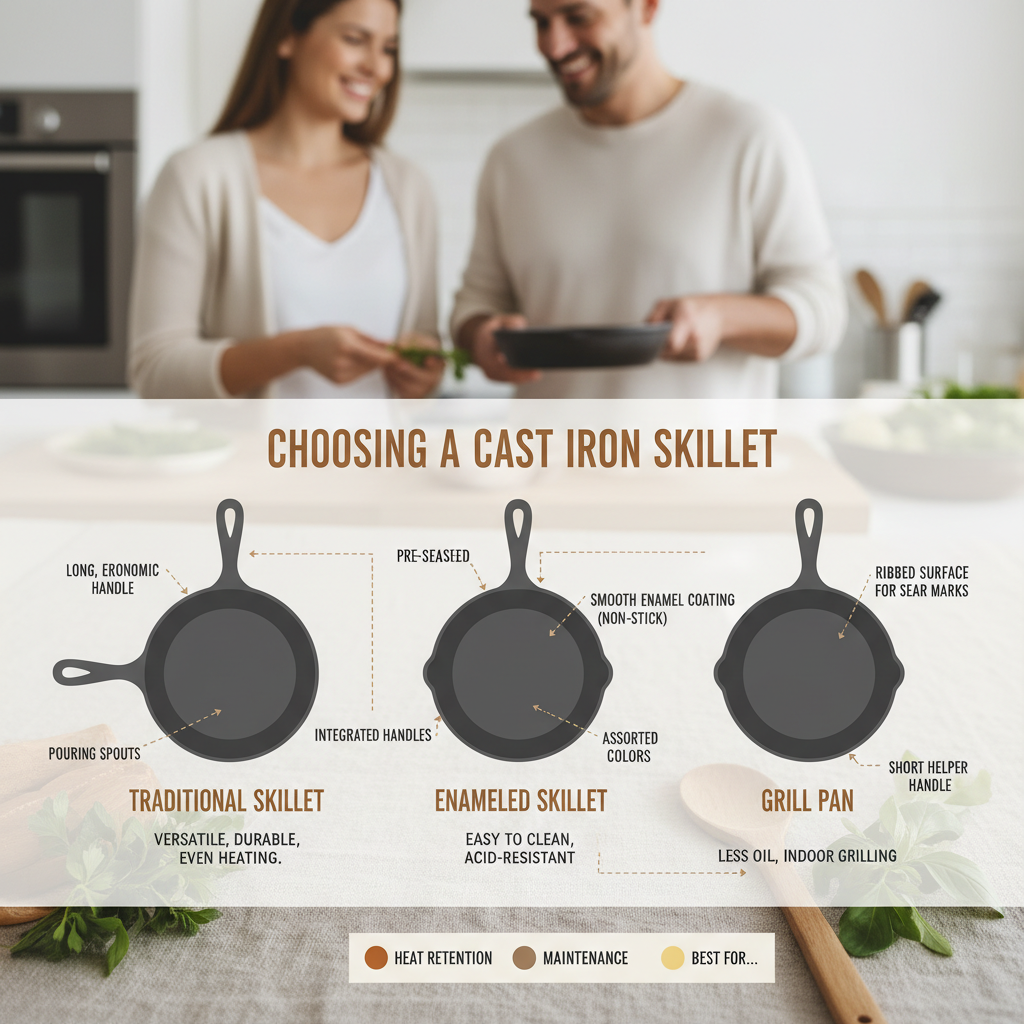
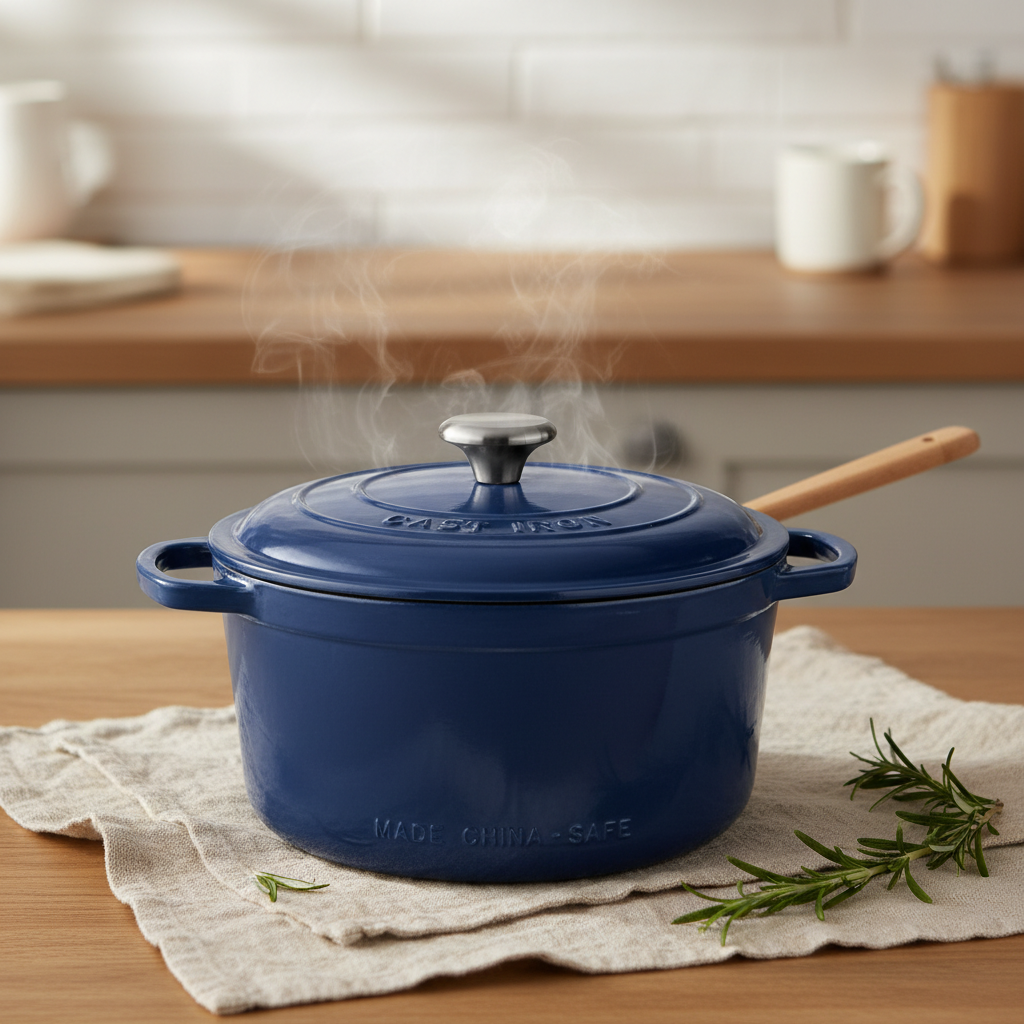
Cast iron skillets are generally made from gray cast iron, known for its excellent heat retention. However, variations exist. Enameled cast iron skillets feature a porcelain enamel coating, offering non-reactivity and easier cleaning. While enameled cast iron doesn't require seasoning, it may not withstand the same high temperatures as traditional cast iron. The construction method, whether sand-cast or machine-cast, also influences the skillet’s smoothness and durability.
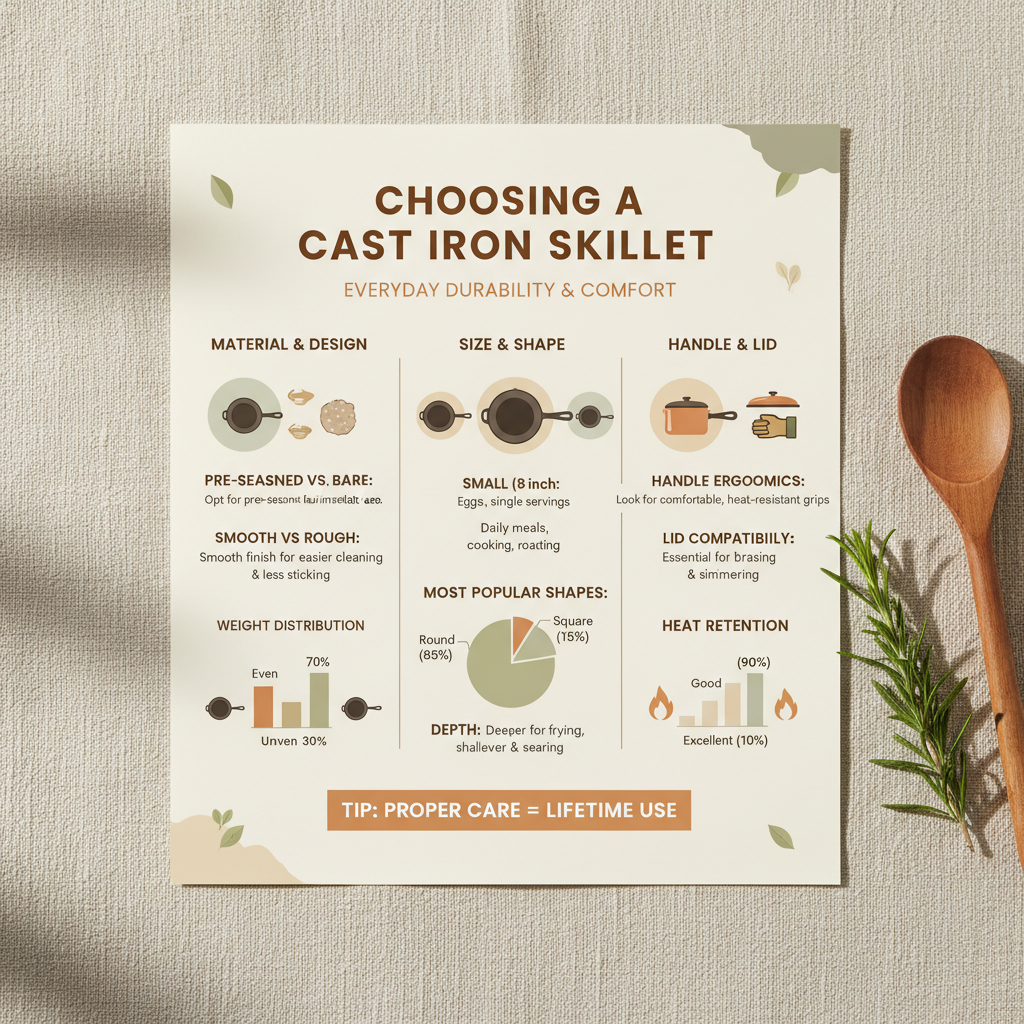
The thickness of the cast iron is a key indicator of quality. Thicker skillets distribute heat more evenly and are less prone to hotspots. Look for skillets with consistent wall thickness and a smooth cooking surface. A slightly rough texture is acceptable, as this aids in seasoning.
Ultimately, the choice between traditional and enameled cast iron, and understanding the nuances of construction, will depend on your cooking style and preferences. For high-heat searing and a traditional cooking experience, unenameled cast iron is the way to go, while enameled cast iron provides convenience and aesthetic appeal.
Understanding Seasoning and Maintenance
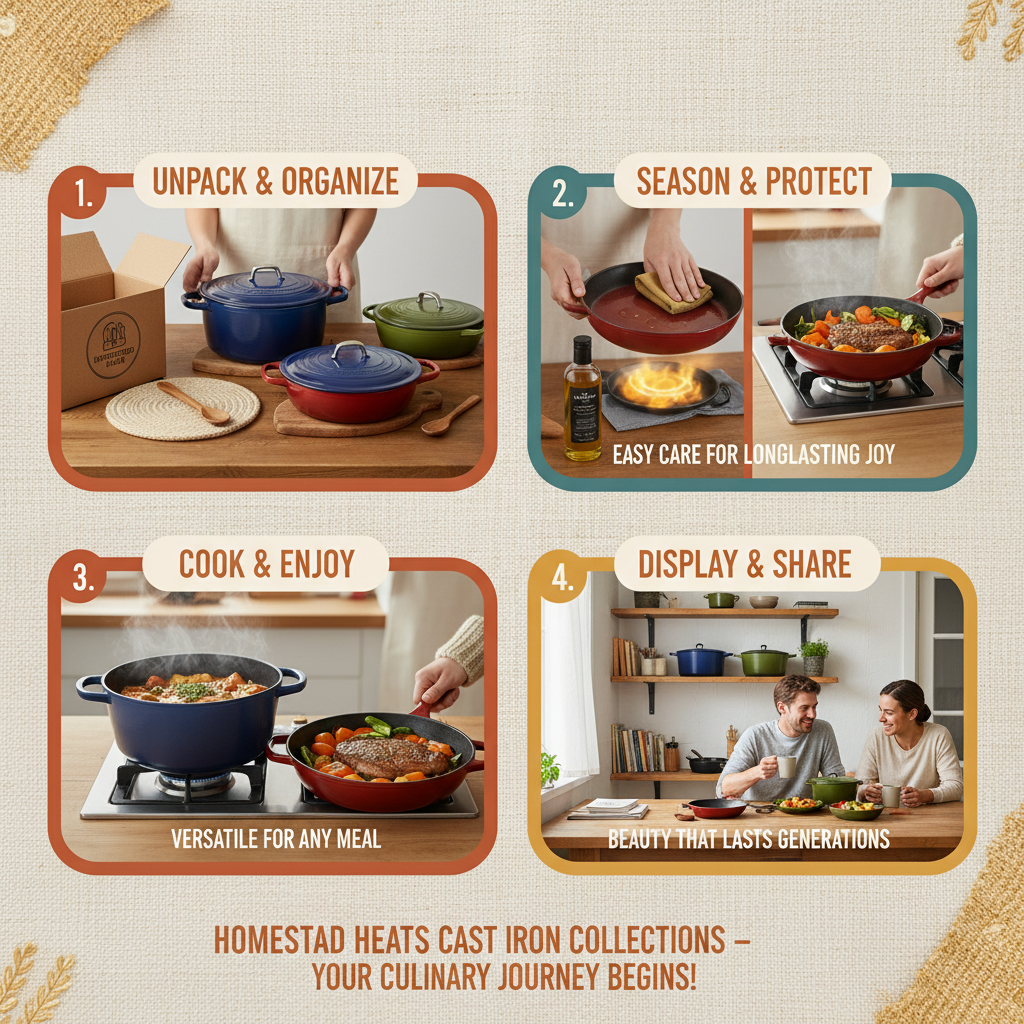
Seasoning is the process of coating cast iron with layers of polymerized oil, creating a natural, non-stick surface. A well-seasoned skillet requires less oil for cooking and is easier to clean. Initially, many skillets are pre-seasoned, but regular maintenance is crucial to maintaining this protective layer.
Proper maintenance involves cleaning the skillet immediately after use, while it's still warm. Avoid harsh soaps or abrasive cleaners, as these can strip the seasoning. Instead, use warm water and a soft brush or scraper. Thoroughly dry the skillet and apply a thin coat of oil before storing. This prevents rust and maintains the seasoning.
Restoring a rusty or poorly seasoned skillet requires more effort, but is achievable. Removing rust involves scrubbing with steel wool, followed by re-seasoning. Regular use and proper care will prevent the need for extensive restoration.
Types and Sizes for choosing a cast iron skillet
Cast iron skillets come in a variety of types, each suited for specific purposes. Standard skillets are versatile all-rounders, while deep skillets are ideal for frying or braising. Grill pans feature raised ridges for creating grill marks. Woks are designed for stir-frying. choosing a cast iron skillet requires matching the type to your cooking habits.
The size of the skillet is equally important. A 10-inch skillet is a good starting point for most home cooks, suitable for everyday meals. Larger skillets (12-inch or larger) are better for family-style cooking or preparing larger cuts of meat. Smaller skillets (6-8 inch) are perfect for single-serving dishes or sauces.
choosing a cast iron skillet: Size vs. Versatility
Global Culinary Traditions and choosing a cast iron skillet
Cast iron plays a pivotal role in cuisines worldwide. In Japan, teppanyaki grills, crafted from cast iron, are used to create spectacular culinary displays. Across the American South, cast iron is synonymous with cornbread, fried chicken, and countless other comfort food staples.
In Morocco, tagines, slow-cooked stews, are traditionally prepared in conical cast iron pots, preserving moisture and enhancing flavors. Similarly, Spain’s paella relies on a wide, shallow cast iron pan to achieve the perfect socarrat – the crispy, caramelized layer of rice at the bottom.
Advantages and Long-Term Value
The long-term value of choosing a cast iron skillet is substantial. A well-maintained skillet can last for generations, becoming a cherished heirloom. Its durability and versatility reduce the need for frequent replacements, saving you money over time.
Beyond cost savings, cast iron offers health benefits. It can increase iron intake in food, especially when cooking acidic dishes. Its ability to heat evenly also promotes more efficient cooking, preserving nutrients.
Furthermore, the environmental impact is lower compared to constantly replacing non-stick cookware. Investing in a cast iron skillet is a sustainable choice that benefits both your wallet and the planet.
Innovations and Future Trends
Recent innovations in cast iron production focus on lighter-weight designs and improved pre-seasoning techniques. Some manufacturers are exploring the use of recycled materials to create more sustainable skillets.
The integration of smart technology is also emerging, with cast iron skillets equipped with temperature sensors and Bluetooth connectivity, allowing for precise cooking control via smartphone apps.
Looking ahead, we can expect to see continued advancements in seasoning technology, making cast iron easier to maintain and more accessible to novice cooks. The trend towards sustainable and heirloom-quality cookware will undoubtedly drive further innovation in the cast iron market.
Factors Influencing Cast Iron Skillet Performance
| Material Composition |
Weight & Thickness |
Seasoning Quality |
Handle Design |
| Gray Cast Iron |
8-12 lbs |
Pre-Seasoned (Rating 7/10) |
Ergonomic, Heat Resistant |
| Enameled Cast Iron |
6-10 lbs |
Porcelain Coating (Rating 8/10) |
Integrated Handles |
| Sand-Cast Iron |
9-14 lbs |
Rough Texture (Rating 6/10) |
Traditional Loop Handle |
| Machine-Cast Iron |
7-11 lbs |
Smooth Surface (Rating 7/10) |
Riveted Handle |
| Composite Cast Iron |
5-9 lbs |
Hybrid Seasoning (Rating 8/10) |
Cool-Touch Handle |
| Recycled Cast Iron |
8-13 lbs |
Eco-Friendly (Rating 9/10) |
Reinforced Handle |
FAQS
The best method involves washing the skillet with warm soapy water, drying it thoroughly, and then applying a very thin, even coat of oil (flaxseed, canola, or vegetable oil work well) to all surfaces. Bake it upside down in a 350-400°F oven for an hour, then let it cool completely. Repeat this process 2-3 times to build a solid base layer of seasoning. Ensuring a thin coat is vital to avoid stickiness.
Traditionally, soap was avoided due to older formulations that could strip seasoning. Modern dish soaps are milder and can be used sparingly. The key is to rinse thoroughly and dry immediately. If you're concerned, stick to warm water and a scrub brush. Re-oil after washing to maintain seasoning. Frequent, gentle cleaning is preferable to letting food residue build up.
For light rust, scrub with steel wool or a scouring pad until the rust is removed. For heavier rust, you might need to use a vinegar soak (equal parts vinegar and water) for a few hours, followed by scrubbing. After removing the rust, thoroughly wash, dry, and re-season the skillet. Remember to apply multiple thin coats of oil during the re-seasoning process.
While acidic foods can potentially react with the iron and impart a metallic taste, a well-seasoned skillet creates a barrier that minimizes this effect. Short cooking times with acidic foods are generally safe, but prolonged simmering might be best avoided in a newer or poorly seasoned skillet. Enameled cast iron is non-reactive and suitable for acidic foods.
A lid helps retain moisture, resulting in more tender and flavorful dishes, especially when braising or simmering. It also speeds up cooking times and reduces splattering. Cast iron lids are ideal, but tight-fitting glass or metal lids can also be used. Make sure the lid is oven-safe if you plan to use it in the oven.
The frequency of re-seasoning depends on how often you use and wash your skillet. As a general rule, if the seasoning starts to look dull or food begins to stick, it's time to re-season. A light re-seasoning after each use, with a thin coat of oil, can help maintain the seasoning. A more thorough re-seasoning may be needed every few months or as needed.
Conclusion
choosing a cast iron skillet is more than just a culinary purchase; it’s an investment in tradition, durability, and superior cooking performance. From understanding the nuances of material and construction to mastering the art of seasoning and maintenance, selecting the right skillet and caring for it properly unlocks a world of culinary possibilities. The versatility and longevity of cast iron make it a sustainable and rewarding addition to any kitchen.
As we look to the future, expect continued innovation in cast iron cookware, with lighter designs, improved seasoning techniques, and even smart technology integration. By embracing these advancements and appreciating the time-honored techniques, you can ensure your cast iron skillet remains a treasured heirloom for generations to come. Visit our website at zdcookware.com to explore our collection and find the perfect cast iron skillet for your needs.