For decades, the choice between cast iron and stainless steel in cookware – and increasingly, in industrial applications – has been a critical one. It's not just about what you're cooking, or what you're building; it's about longevity, performance, and ultimately, the total cost of ownership. Understanding the nuances of cast iron vs stainless is vital for everyone from home cooks to large-scale engineering projects. The global reliance on durable materials impacts everything from food security to infrastructure development, driving demand for informed material selection.
The relevance spans industries. Stainless steel, with its corrosion resistance, is dominant in medical and food processing. Cast iron, celebrated for its heat retention, remains a staple in culinary traditions. But these are simplified views. Increasingly, engineers and manufacturers need a deeper understanding of the strengths and weaknesses of each, often blending the two materials to achieve optimal results. Data from the World Steel Association shows a consistent global demand for both, with stainless experiencing growth in emerging economies due to infrastructure projects.
At its core, cast iron vs stainless is a comparison of two fundamentally different alloys. Cast iron is an iron alloy with high carbon content, known for its ability to withstand high temperatures and its relatively low cost. Stainless steel, on the other hand, incorporates chromium – typically 10.5% or more – to provide corrosion resistance. Modern industrial needs demand materials that balance these properties – strength, durability, cost-effectiveness, and resistance to environmental factors, impacting areas like wastewater treatment and sustainable building practices.
The Historical Development of cast iron vs stainless
Cast iron’s roots run deep, back to ancient China around the 5th century BC, and was heavily utilized by the Romans. For centuries, it was the metal for cookware, stoves, and even cannons. It's a material I've seen holding up in relics and restoration projects – tough stuff, if properly maintained. Stainless steel, comparatively, is a 20th-century invention, patented in 1913 by Harry Brearley in Sheffield, England. He was trying to create a corrosion-resistant alloy for gun barrels, and inadvertently stumbled onto something that revolutionized food processing and countless other industries.
The development of stainless steel was a game-changer. It addressed the primary weakness of cast iron – its susceptibility to rust. While cast iron's durability is legendary, it requires constant attention to prevent corrosion. Stainless, with its chromium content, offered a significantly lower maintenance alternative. This evolution reflects a broader trend in materials science – the pursuit of performance and ease of use, which is what we’re all striving for on the job site.
The Composition and Manufacturing of cast iron vs stainless
Cast iron isn't a single material, it's a family. Gray cast iron, the most common type, is characterized by its graphite flakes, which give it good machinability but lower tensile strength. Ductile cast iron, with its spheroidal graphite, offers superior strength and ductility. The manufacturing process usually involves melting iron ore with coke and limestone in a blast furnace. It's a fairly straightforward process, which contributes to its lower cost. You’re dealing with a lot of heat and potentially volatile materials, but the core principles are relatively simple.
Stainless steel production is more complex. It starts with melting iron ore, but then specific amounts of chromium, nickel, molybdenum, and other alloying elements are added. There are several types – austenitic, ferritic, martensitic, and duplex – each with different properties. The precise composition dictates the corrosion resistance, strength, and weldability. I’ve spent time in mills watching this process, and the control required to achieve the desired alloy is impressive.
The key difference comes down to the chromium. That 10.5% minimum is the magic number. It forms a passive layer of chromium oxide on the surface, protecting the underlying steel from corrosion. That’s why you see stainless steel used in harsh environments, like chemical processing plants or marine applications – it simply holds up better.
Durability and Material Strength in cast iron vs stainless
In terms of sheer compressive strength, cast iron generally wins. That's why you still see it used in things like engine blocks and manhole covers. It can handle significant loads without deforming. However, cast iron is brittle and has limited tensile strength – meaning it doesn't stretch or bend well before breaking. Drop a cast iron pan, and it's likely to shatter. I've seen it happen too many times.
Stainless steel, especially the austenitic grades, boasts much higher tensile strength and ductility. It can withstand bending and impact without fracturing. That's why it's favored in applications where flexibility and resistance to shock are crucial, like surgical instruments or aerospace components. It's a tougher material overall, even if it doesn’t have the same compressive strength as cast iron.
The choice really depends on the application. For static, compressive loads, cast iron is often sufficient and more cost-effective. For dynamic loads or environments where corrosion is a concern, stainless steel is the clear winner. It’s about understanding the stresses the material will face.
Cost Analysis: cast iron vs stainless
Let’s be blunt: cast iron is cheaper. The raw materials are less expensive, and the manufacturing process is simpler. You'll pay significantly less for a cast iron pan than a comparable stainless steel one. From a large-scale industrial perspective, that cost difference can be substantial, especially for projects requiring large quantities of material. It's a factor that always comes up in budget discussions.
However, you need to consider the total cost of ownership. Stainless steel's corrosion resistance reduces maintenance and replacement costs. Cast iron requires regular seasoning and protection against rust. If you factor in the labor and materials required for maintenance, the long-term cost of cast iron can easily exceed that of stainless steel. As a PM, I’m always looking at lifecycle costs, not just initial purchase price.
Cost Comparison: cast iron vs stainless
Practical Applications and Use Cases of cast iron vs stainless
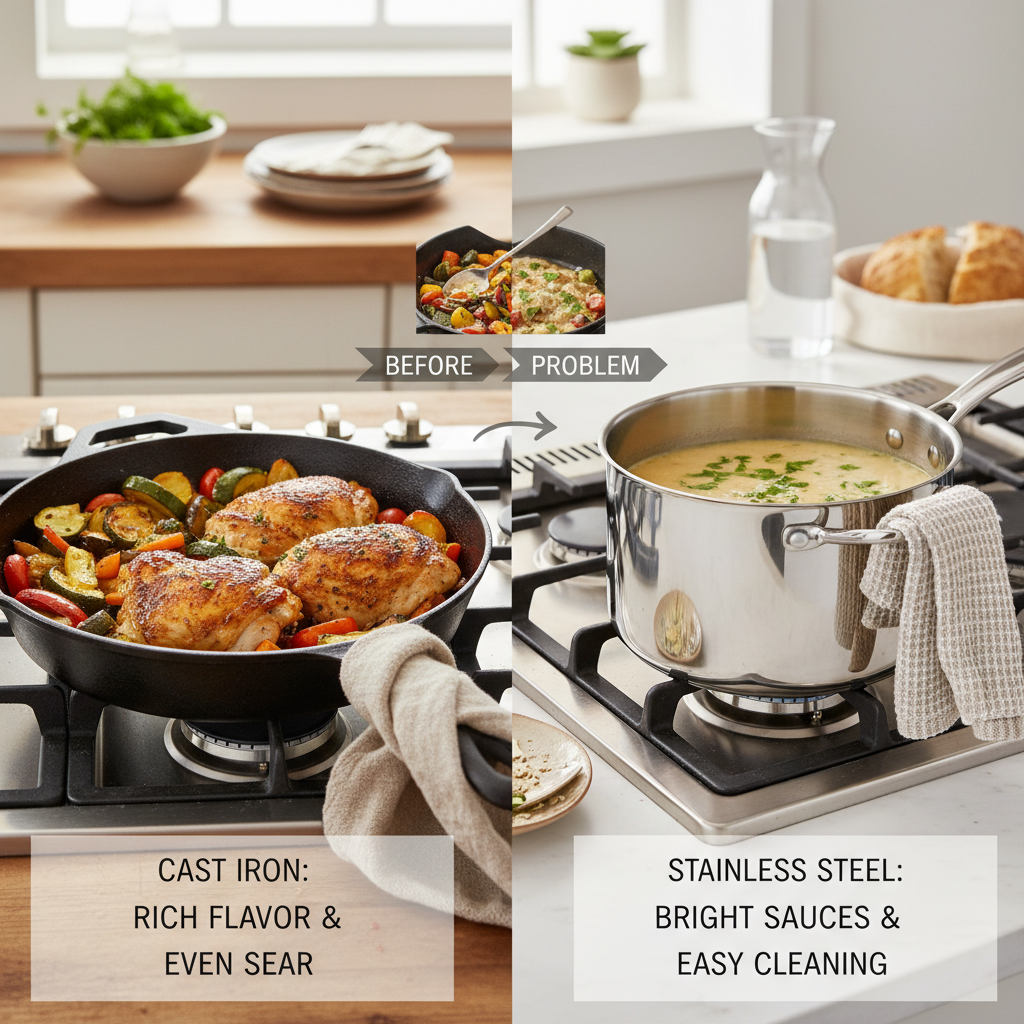
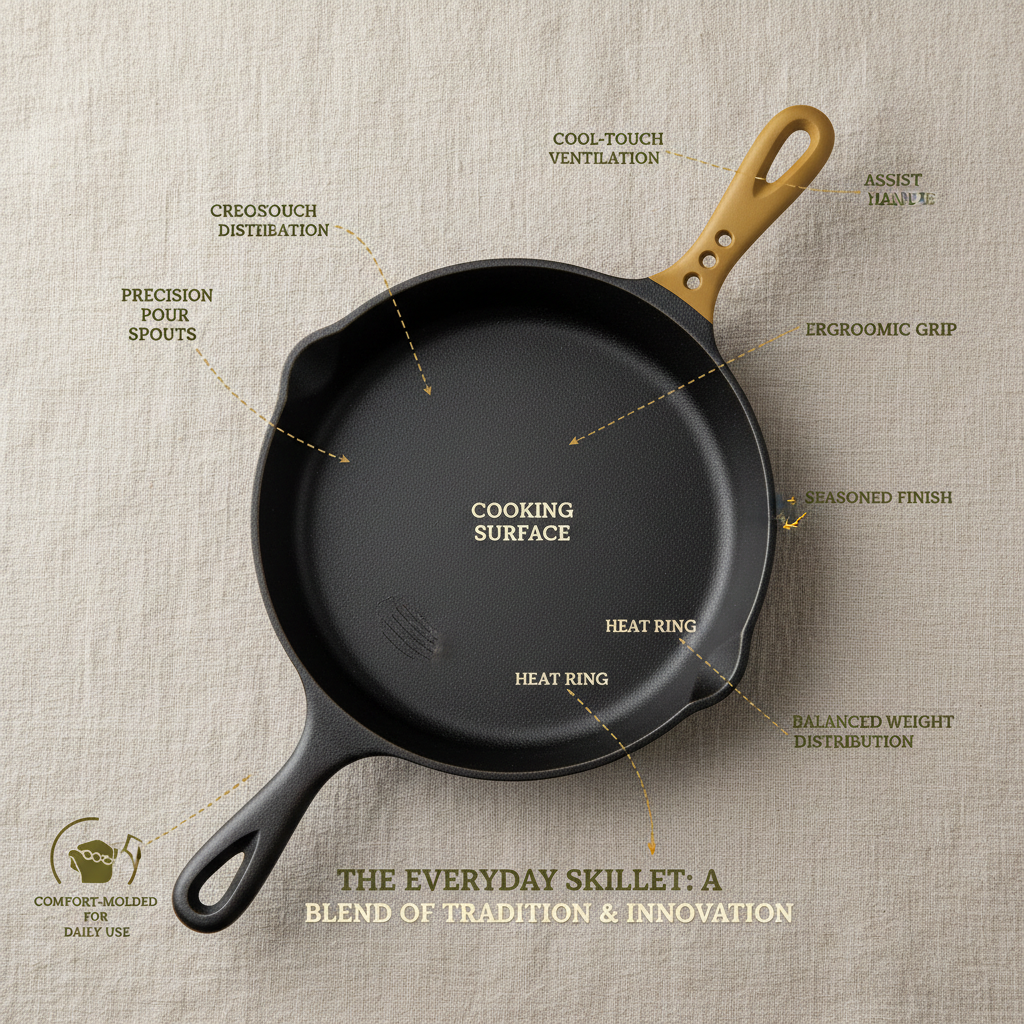
You'll find cast iron in cookware, engine blocks, machinery bases, and even decorative items. Its ability to retain heat makes it ideal for searing and frying, and its weight provides stability. In industrial settings, its compressive strength is utilized in heavy-duty applications. I've seen antique cast iron parts still functioning perfectly after a century of use.
Stainless steel dominates the food processing, medical, and chemical industries. It's used in everything from surgical instruments and kitchen sinks to pipelines and storage tanks. Its corrosion resistance is critical in these environments. Its hygienic properties make it essential in applications where cleanliness is paramount.
Environmental Impact and Sustainability of cast iron vs stainless
Cast iron production can have a significant environmental impact due to the energy-intensive nature of iron ore smelting and the potential for air and water pollution. Recycling cast iron is well-established, but the initial production phase is a concern. Stainless steel production also requires significant energy, and the mining of alloying elements like chromium and nickel can have environmental consequences.
However, stainless steel is highly recyclable – and often recycled. It retains its properties even after multiple recycling cycles, contributing to a circular economy. Increasingly, manufacturers are exploring the use of recycled stainless steel to reduce their environmental footprint. It’s a trend I’m seeing more and more on construction sites, with companies prioritizing sustainable materials.
Future Trends in cast iron vs stainless
We're seeing a resurgence of interest in cast iron cookware, driven by a desire for more sustainable and durable kitchen tools. But it's not just about nostalgia; new coating technologies are improving cast iron's resistance to rust and making it easier to maintain. In the realm of stainless steel, research is focused on developing new alloys with enhanced corrosion resistance, improved strength, and reduced reliance on critical elements like nickel.
Additive manufacturing (3D printing) is also playing a role, allowing for the creation of complex geometries and customized parts from both cast iron and stainless steel. This opens up new possibilities for design and performance. The blending of the two materials, creating composite structures, is another area of active research.
The push for sustainability will continue to drive innovation. Expect to see more recycled materials, more energy-efficient production processes, and a greater emphasis on lifecycle assessment when selecting between cast iron vs stainless.
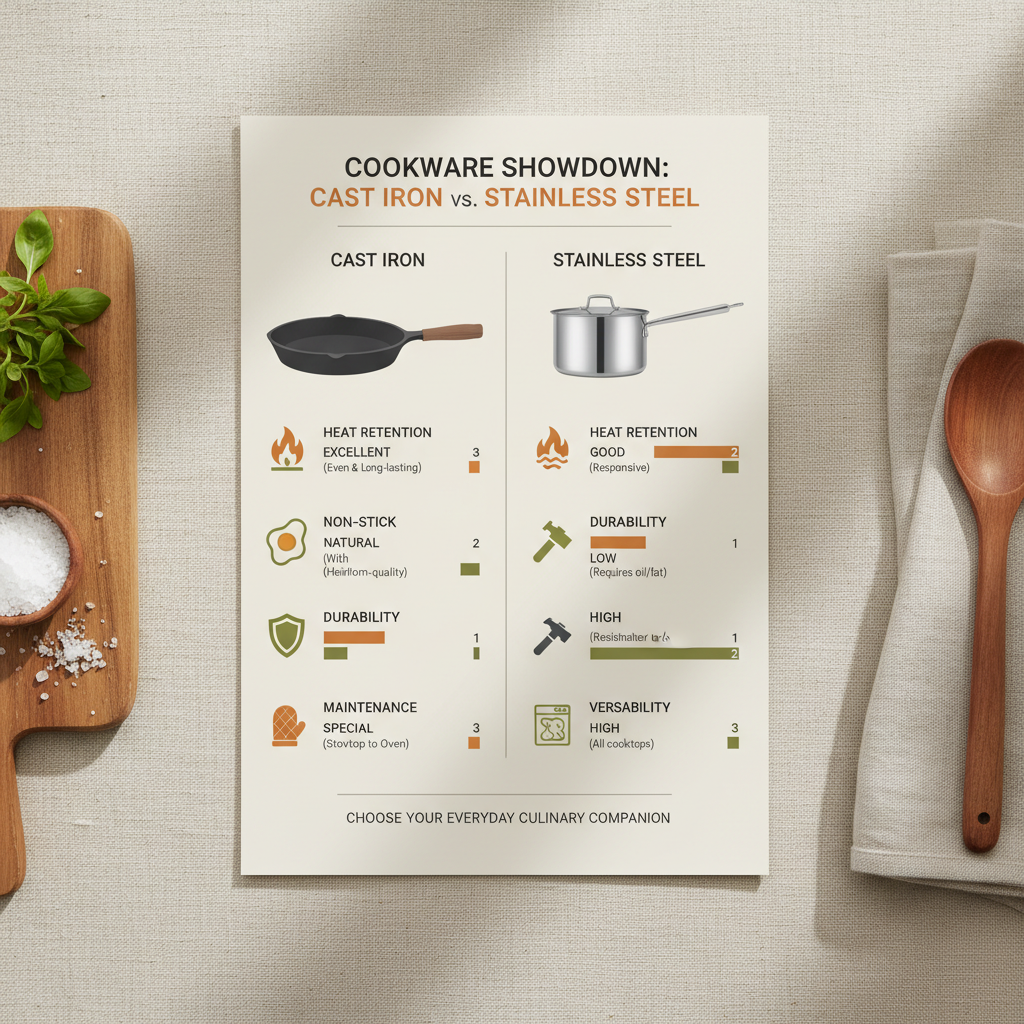
Key Comparative Analysis of cast iron vs stainless
| Material Type |
Corrosion Resistance |
Strength & Durability |
Cost (Relative) |
| Cast Iron |
Low – Prone to rust if not properly maintained |
High Compressive Strength, Low Tensile Strength |
Low (3/10) |
| Stainless Steel (304) |
High – Excellent resistance to corrosion |
Good Tensile and Compressive Strength |
Medium (6/10) |
| Ductile Cast Iron |
Moderate – Better than Gray Cast Iron |
High Tensile and Compressive Strength |
Medium (5/10) |
| Stainless Steel (316) |
Very High – Superior resistance to chloride corrosion |
Excellent Strength and Ductility |
High (8/10) |
| Coated Cast Iron |
Moderate – Dependent on coating quality |
Similar to Gray Cast Iron |
Medium (6/10) |
| Duplex Stainless Steel |
Excellent – Combines austenitic and ferritic properties |
Very High Strength and Corrosion Resistance |
High (9/10) |
FAQS
That depends on your priorities! Cast iron excels at heat retention, making it great for searing, while stainless steel is easier to clean and doesn’t require seasoning. Stainless offers more versatility for tasks like boiling and simmering. I recommend having both in your kitchen – they each have their strengths. If you’re a serious cook who values heat control and aren't afraid of maintenance, cast iron is fantastic. Otherwise, stainless is a reliable all-rounder.
Yes, absolutely. Properly seasoned cast iron is a non-stick surface and won’t leach harmful chemicals into your food. The main concern is iron absorption, which is generally minimal. Some people with iron overload conditions may want to avoid prolonged cooking with cast iron. The key is to maintain a well-seasoned surface and avoid cooking highly acidic foods for extended periods in unseasoned cast iron.
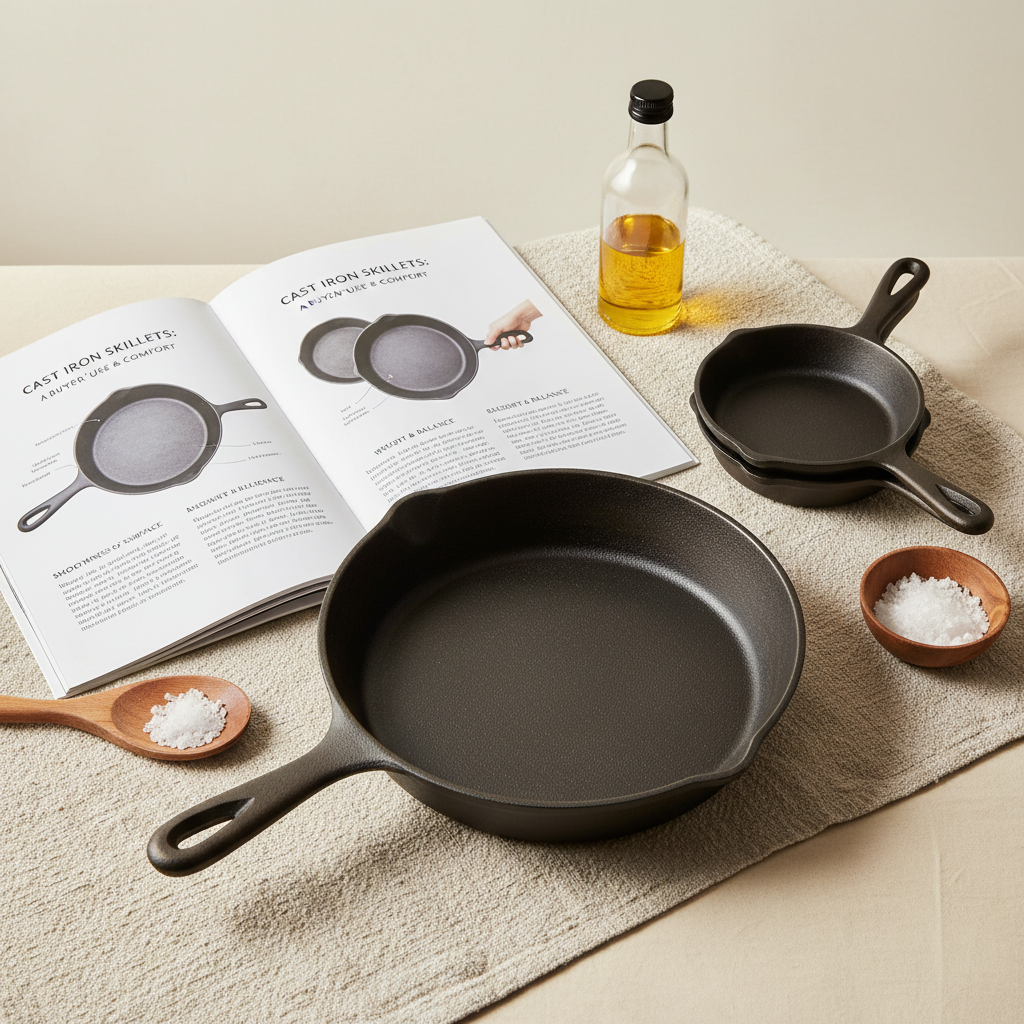
Seasoning is crucial. After each use, clean the pan with hot water (no soap!), dry it thoroughly, and apply a very thin layer of oil. Heat it in the oven for about an hour to polymerize the oil and create a protective coating. Avoid letting it sit wet for extended periods. Regular seasoning is the key to preventing rust.
Not entirely. While stainless steel is highly corrosion-resistant, it can rust under certain conditions, particularly in the presence of chlorides (like salt). Lower grades of stainless are more susceptible. Regular cleaning and avoiding prolonged exposure to harsh chemicals will help prevent corrosion. It's all about choosing the right grade for the environment it will be used in.
Stainless steel is generally much better suited for outdoor applications due to its superior corrosion resistance. Cast iron can be used outdoors with proper protective coatings, but it requires significantly more maintenance. The environment plays a huge factor. If you're near saltwater, stainless is almost always the better choice.
Both have environmental costs. Cast iron production is energy-intensive, but it's highly recyclable. Stainless steel requires mining of alloying elements. However, stainless is also readily recyclable, and high-quality recycled stainless retains its properties. Ultimately, choosing recycled materials and prioritizing energy-efficient manufacturing processes are key to minimizing the environmental impact of both.
Conclusion
Understanding cast iron vs stainless isn’t about declaring a single winner. It’s about recognizing that each material possesses unique strengths and weaknesses, and the ideal choice hinges on the specific application, budget, and long-term needs. From ensuring durable infrastructure to providing reliable cookware, careful material selection is critical for performance and sustainability.
Looking ahead, we’ll see continued innovation in both materials, with a focus on enhanced properties, sustainable manufacturing practices, and increased recyclability. The future lies in leveraging the best of both worlds – combining the strengths of cast iron and stainless steel to create more resilient, efficient, and environmentally responsible solutions. Visit our website at www.zdcookware.com to learn more about our commitment to quality and innovation in cookware.