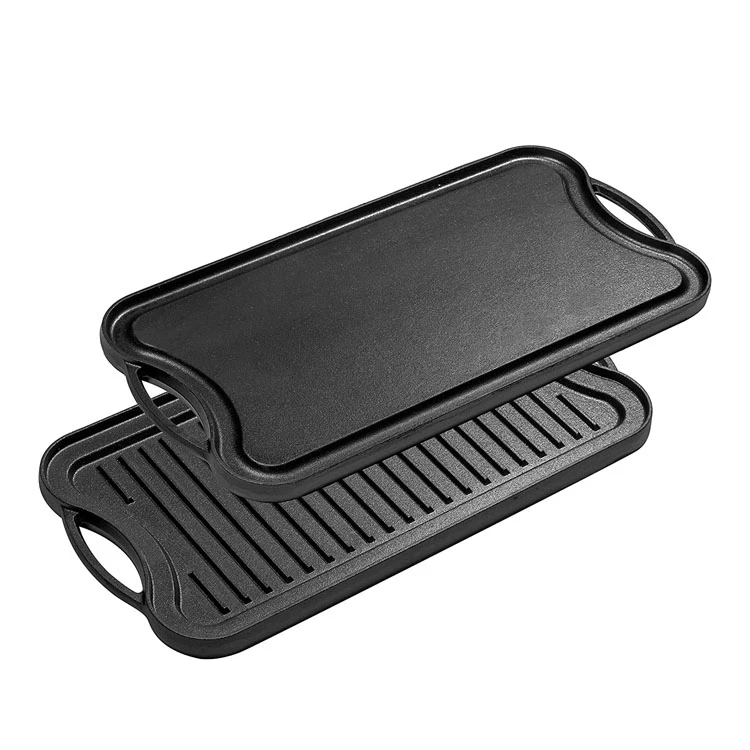
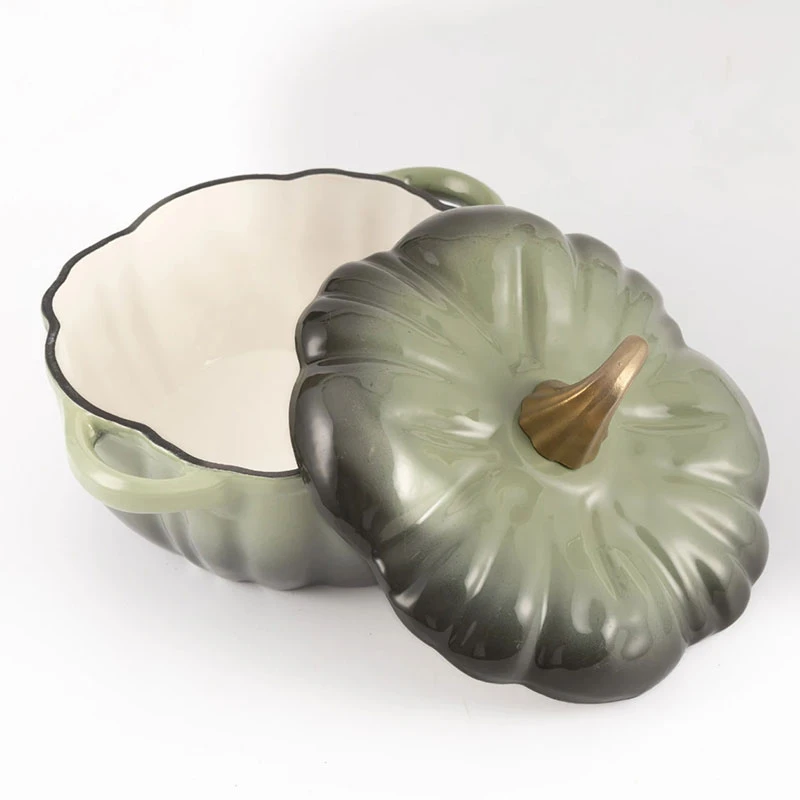
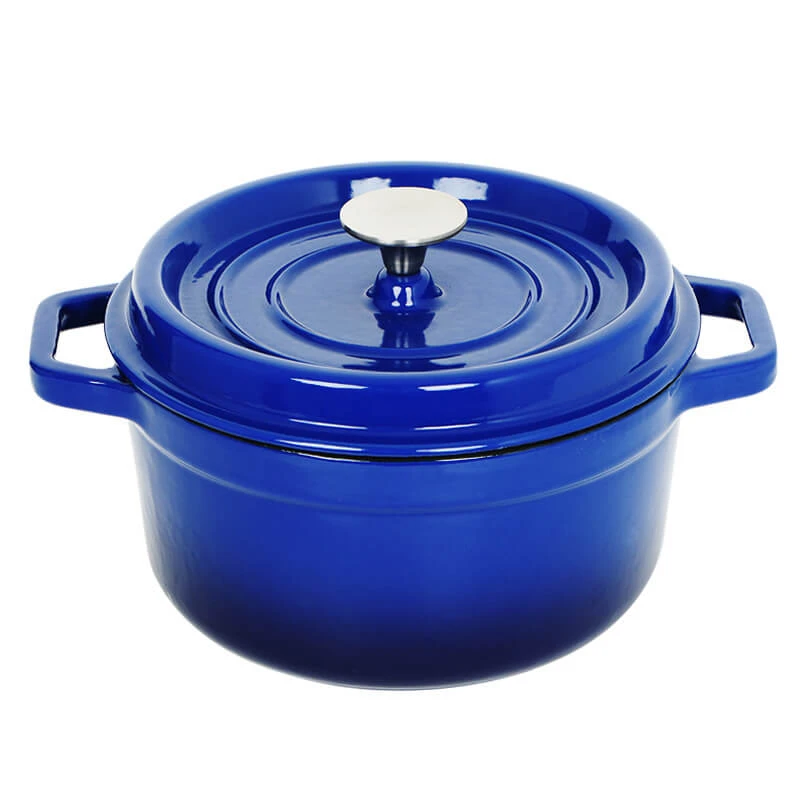
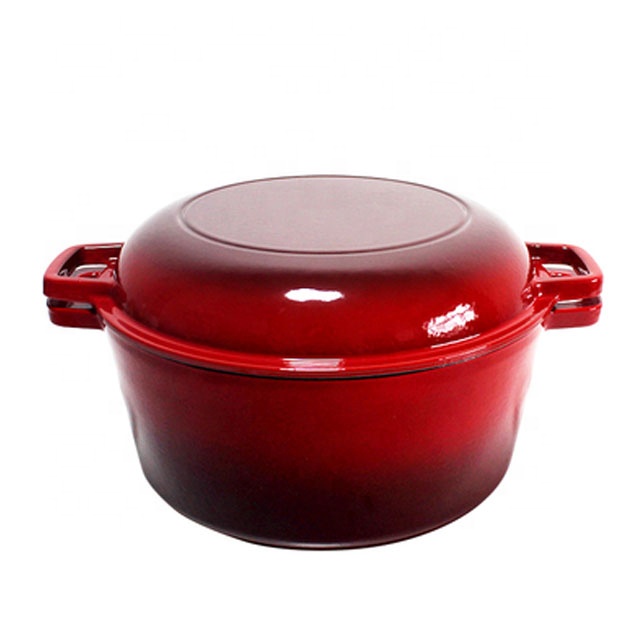
2 in 1 Cast Iron Dutch Oven: Sear, Bake & Serve—Why Buy?
I’ve cooked on a lot of iron in my time, and the piece I keep pulling off the rack is a 2 in 1 cast iron dutch oven. It’s simple: fewer lids, more functions, excellent heat. Zhonda Cookware’s OEM model from Hebei, China (yes, the foundry address is literally West of the middle section of Baigu Road, Baixiang County, Xingtai City, 055450) is the latest I’ve handled—and, to be honest, it’s a solid industrial story as much as a kitchen one.
What’s hot in cast iron now
Three trends keep popping up: multipurpose designs (bread lid turns into skillet), enamel that survives real-world abuse, and full-bore compatibility—gas, induction, campfire, oven. Consumers want one tool to sear, stew, and bake. Brands want repeatable quality and certifications (LFGB, FDA) without blowing up costs. This 2 in 1 cast iron dutch oven fits right in.
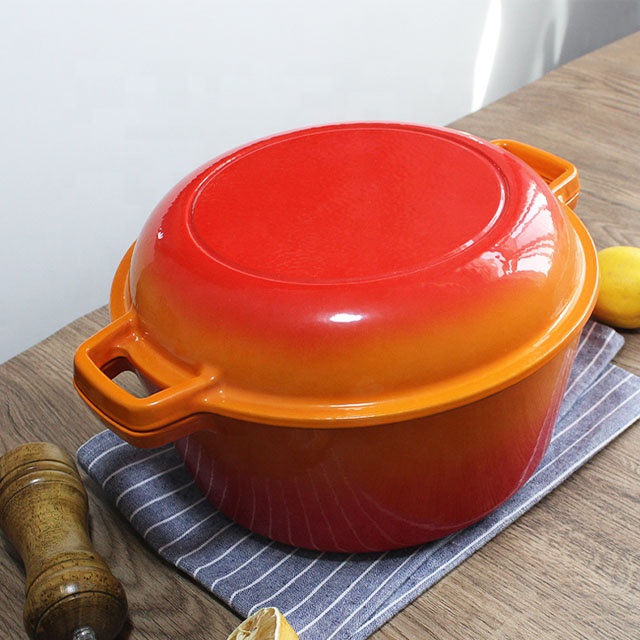
Key specifications (real kitchens, not just lab benches)
| Model | ZHD26001 Double Dutch, OEM |
| Diameter | ≈ 26 cm (10.25 in) |
| Capacity | Base ≈ 4.8 L (≈ 5.1 qt); Lid-skillet ≈ 1.6 L |
| Wall/Base thickness | ≈ 4.0–4.5 mm |
| Weight | ≈ 6.2–6.8 kg set (real-world use may vary) |
| Material | ASTM A48 gray cast iron, vitreous enamel, stainless knob option |
| Heat tolerance | Up to ≈ 260°C / 500°F |
| Cooktop | Gas, electric, ceramic, induction, oven, campfire |
| Compliance | LFGB, FDA 21 CFR 175.300, EN ISO 4531 metal release |
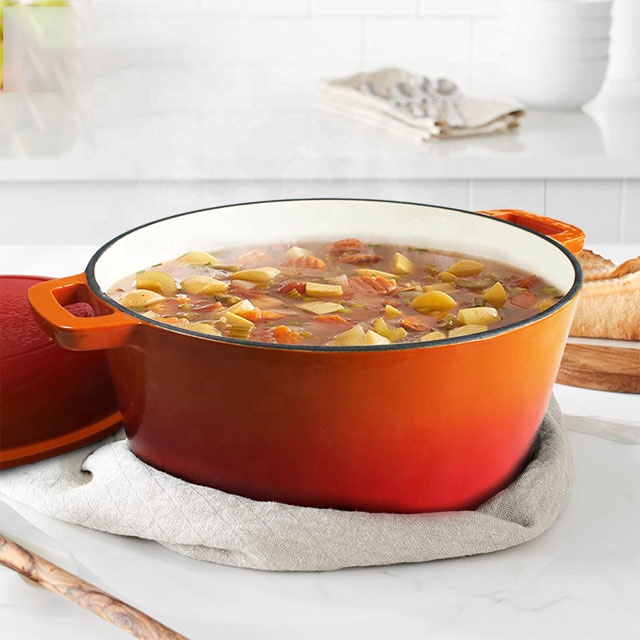
How it’s made (process flow in brief)
Materials: pig iron + recycled steel charge, alloyed for ASTM A48 Class 30–40 equivalents. Methods: green-sand casting; shot-blast; CNC trim/machine; three-coat, two-fire enamel (ground coat + color + interior). Firing temp: ≈ 780–830°C. Testing: coating thickness gauge (target 180–300 μm), pinhole/holiday test, ISO 4532 impact, thermal shock ΔT≈180°C, EN ISO 4531 Pb/Cd migration (recent batch: Pb < 10 μg/L, Cd < 5 μg/L, pass). Service life: around 10–15 years with normal home use; longer in low-acid routines.
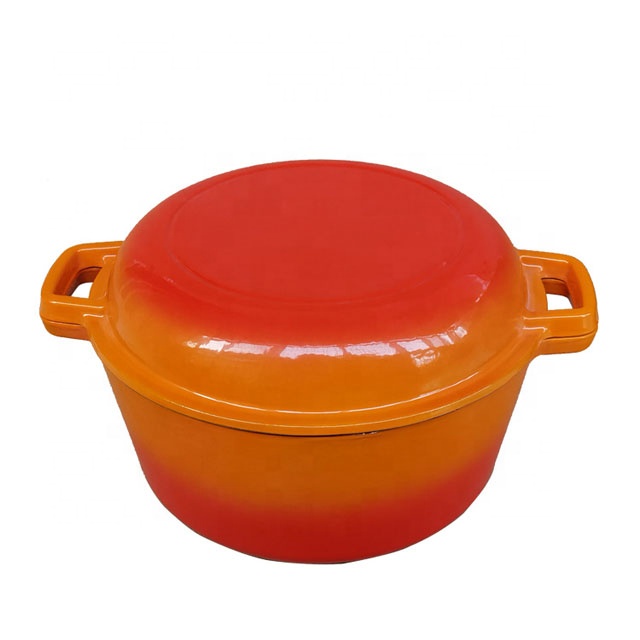
Use cases, advantages, and customization
- Sourdough and boules (the lid as skillet makes scoring easier—nice touch).
- Sear-to-oven braises; chili nights; cobblers. Outdoors? It can take the coals.
- Restaurants: back-of-house braise pan, front-of-house bakeware—one SKU, two jobs.
Advantages: heat retention, even browning, enamel cleanup. The lid doubling as a skillet saves storage—many customers say that’s the clincher. Custom options include RAL colors (gloss or matte), embossed logos, knob materials (SS, brass), retail packaging, and private molds. MOQs typically around 300–500 sets; lead time ≈ 35–45 days after artwork sign-off.
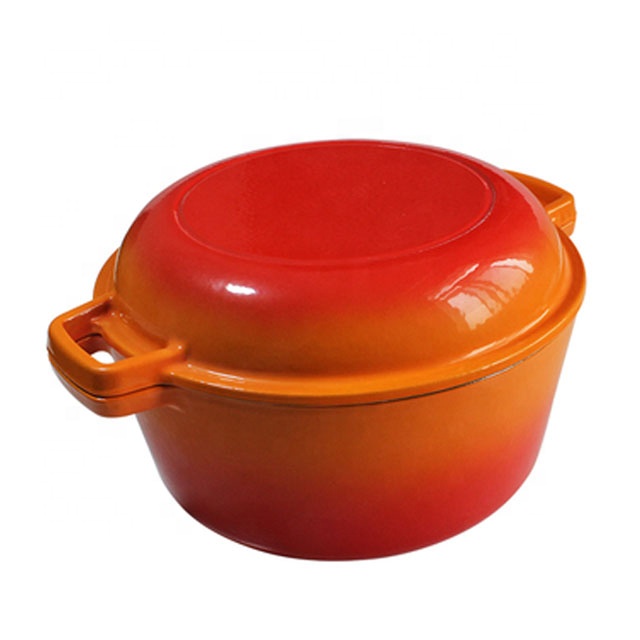
Vendor snapshot: how Zhonda stacks up
| Vendor | Zhonda Cookware (Hebei) | Generic Trading House | Boutique Western Brand |
| OEM/ODM depth | High: custom molds, colors | Medium: color only | Low: fixed SKUs |
| Certs (typ.) | LFGB, FDA, EN ISO 4531 | Varies | Full suite |
| Lead time | ≈ 35–45 days | ≈ 50–70 days | ≈ 60–90 days |
| Unit cost (FOB est.) | ≈ $18–28 | ≈ $25–35 | ≈ $60–120 |
Field notes and mini case studies
A DTC bakeware brand I visited swapped a three-piece set for this 2 in 1 cast iron dutch oven and cut SKU count by 30% while keeping average order value intact—customers liked the skillet-lid logic. A US outdoor label specified matte black enamel to hide campfire scuffs; thermal shock testing to ΔT 180°C for 50 cycles passed, and ISO 4532 impact at 0.2 kg/300 mm showed no spall.
Feedback? Surprisingly little sticking on the lid-skillet after a brief seasoning of the enamel’s microtexture. Cleanup scores well; acidic tomato braises left no discoloration in lab soak per ISO 28706 protocol (house test, not certification).
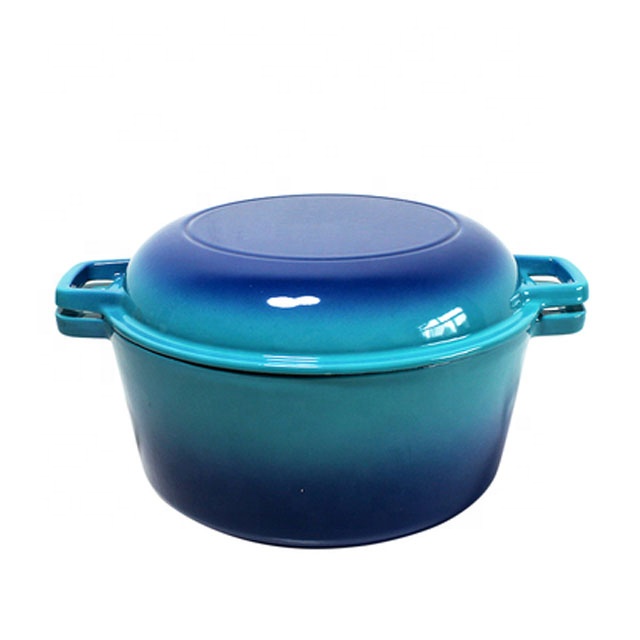
Bottom line: if you want a durable, spec-backed workhorse with OEM flexibility, this 2 in 1 cast iron dutch oven is a pragmatic pick—less cupboard clutter, more cooking.
Authoritative references
- EN ISO 4531:2018 – Vitreous and porcelain enamels — Release from enamelled articles in contact with food.
- LFGB (Germany) – Food, Articles of Daily Use and Feed Code; migration testing guidance.
- FDA 21 CFR 175.300 – Resinous and Polymeric Coatings for food contact.
- ISO 4532:2010 – Vitreous enamels — Determination of resistance to impact.
- ASTM A48/A48M – Standard Specification for Gray Iron Castings.
-
Antique Cast Iron Camp Oven: Durable Outdoor Cookware for Professionals | ZD CookwareNewsJan.06,2026
-
Durable 4 Quart Camping Pot for Professional Use | ZD CookwareNewsJan.06,2026
-
Durable Campfire Cast Iron Pot for Outdoor & Industrial UseNewsJan.06,2026
-
Cast Iron Griddle for Camp Stove – Durable Outdoor Cooking EssentialNewsJan.06,2026
-
Dutch Oven Cast Iron Camping – Durable Outdoor Cooking GearNewsJan.05,2026
-
Durable and Efficient Cast Iron Camping Griddle for B2B Professionals | ZD CookwareNewsJan.05,2026