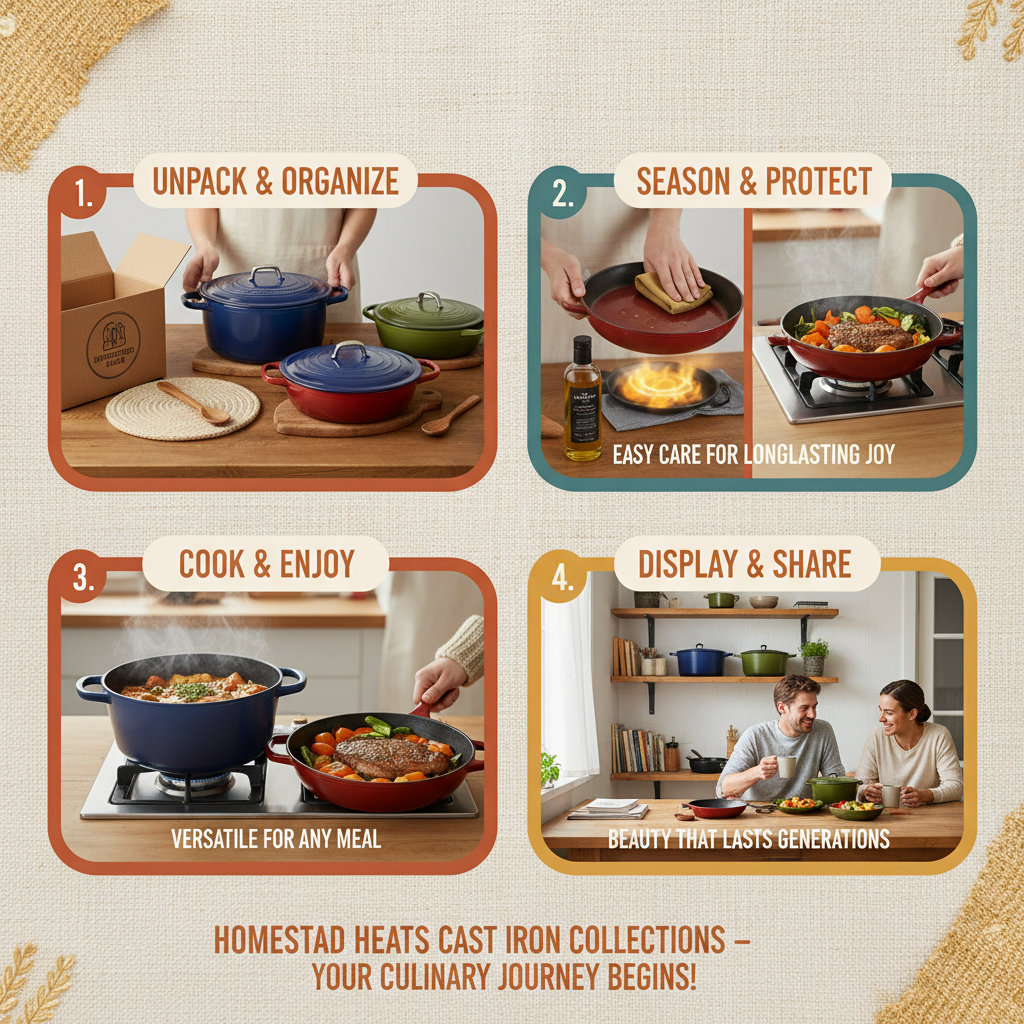
The global demand for professional-grade cookware has seen a significant shift toward materials that offer superior thermal mass and lifelong durability. For commercial procurement officers and retail distributors, sourcing wholesale cast iron skillets is no longer just about finding the lowest unit price, but about evaluating the metallurgical integrity and seasoning consistency of the product.
This transition is driven by a growing preference for "slow food" and traditional cooking methods in both home and professional kitchens. However, the challenge for buyers lies in distinguishing between mass-produced, low-grade castings—which often suffer from porosity and uneven heat distribution—and precision-engineered cast iron that meets strict food-grade safety standards.
This analysis explores the technical specifications and procurement frameworks necessary for selecting high-performance cast iron cookware, while examining how specialized tools like the grill press complement the functionality of a professional skillet range to enhance culinary precision.


Cast iron is an alloy of iron, carbon, and silicon, where the carbon content typically exceeds 2%. The structural integrity of cookware depends on the graphite morphology within the iron matrix. In high-quality cookware, the distribution of these elements ensures a balance between hardness and thermal conductivity.
Modern production leverages advanced foundry technology to eliminate impurities. By controlling the cooling rate, manufacturers can prevent internal stresses that lead to cracking, ensuring that the final product is not only durable but also safe for food contact without the need for toxic coatings.
When analyzing the specifications of a cast iron range, the weight-to-surface area ratio is a primary indicator of heat retention. A heavier base prevents warping under high thermal stress and ensures that the pan maintains a consistent temperature even when cold proteins are added, which is critical for achieving the Maillard reaction.
Surface finish is equally vital. Professional-grade products undergo shot blasting and pre-seasoning to create a microscopic texture that bonds with cooking oils. This process transforms the surface into a natural non-stick barrier, reducing the reliance on synthetic polymers that degrade at high temperatures.
Furthermore, the integration of ergonomic elements—such as heat-resistant wooden handles found in accessory tools like grill presses—demonstrates a focus on user safety and operational efficiency. A secure attachment using industrial-grade screws prevents handle failure during high-intensity commercial use.
The primary engineering advantage of cast iron over aluminum or stainless steel is its high volumetric heat capacity. This allows the vessel to act as a thermal reservoir, mitigating the temperature drops often seen in thinner pans.
To optimize this, professional chefs often use auxiliary tools to increase the contact area. For instance, a cast iron grill press applies equalized weight distribution, forcing the food into direct contact with the heat source, thereby reducing cooking time and ensuring uniform browning on both sides.
Selecting the right material depends on the specific application. While non-stick pans are suitable for low-heat tasks, they fail in high-sear environments where cast iron excels.
The following assessment evaluates various cookware materials based on a normalized engineering score, focusing on thermal stability, durability, and suitability for high-temperature searing.
In high-volume restaurant kitchens, the use of cast iron is concentrated in "stations" requiring high-heat stability. Typical deployment scenarios include searing steaks or pressing panini. The use of a dedicated meat press, featuring line grooves for visual appeal, allows chefs to maintain consistent grill marks while pressing out excess grease for healthier preparation.
These tools are designed for versatility across various surfaces, including induction stoves, flat tops, and teppanyaki grills. Because they are corrosion-resistant and made from food-grade materials, they withstand the rigorous cleaning cycles and high-frequency usage typical of the B2B catering sector.
The manufacturing of cast iron has evolved from simple sand casting to precision foundries. Current trends emphasize the reduction of environmental impact through eco-friendly practices and the implementation of scientific management systems to ensure quality consistency across large batches.
R&D focus has shifted toward improving the "out-of-the-box" experience. By refining pre-seasoning techniques, manufacturers can provide products that are immediately functional for the end-user, reducing the maintenance burden on the buyer and the final consumer.
Future developments are likely to integrate more advanced alloys to reduce the overall weight of the cookware without compromising its thermal retention properties, making it more accessible for diverse kitchen environments.
When negotiating contracts for wholesale cast iron skillets, buyers must look beyond the surface finish. A robust evaluation includes checking the casting density, the quality of the seasoning layer, and the stability of the handle attachments.
The ability of a supplier to offer OEM and ODM services is a critical factor for brands looking to customize their product lines for specific market niches, such as camping gear or professional chef sets.
The following matrix provides a selection framework based on different operational profiles, helping procurement officers align product specifications with their intended application.
| Configuration Profile | Thermal Mass | Surface Finish | Recommended Use Case |
|---|---|---|---|
| Basic Configuration | Standard | Basic Seasoning | Home Kitchen / Retail |
| Standard Configuration | Medium-High | Pre-Seasoned | Boutique Restaurants |
| High-Duty Configuration | Maximum | Industrial Grade | Commercial Steakhouses |
| Precision Configuration | Balanced | Ultra-Smooth | Specialty Culinary Labs |
| Camping Configuration | Optimized Weight | Heavy Duty Coating | Outdoor/Adventure Gear |
| Industry Baseline | Variable | Standard | General Wholesale Market |
Critical markers include the absence of surface pitting (porosity), consistent wall thickness to prevent hot spots, and a secure, burr-free finish on handles. For wholesale buyers, checking the quality of the pre-seasoning is essential, as this determines the initial non-stick performance and corrosion resistance of the cookware.
A grill press increases the thermal transfer efficiency by ensuring maximum contact between the food and the cooking surface. By flattening the ingredients (such as bacon or burger patties), it eliminates air gaps, reduces cooking time, and ensures a uniform sear across the entire surface of the protein.
Yes, cast iron is inherently ferromagnetic, making it highly compatible with induction stoves. However, the flat bottom of the skillet or press is crucial for optimal energy transfer. High-quality castings ensure a level base that maximizes the induction coil's efficiency.
Pre-seasoned cast iron has been treated with a layer of polymerized oil during manufacturing, providing immediate rust protection and non-stick properties. Raw cast iron requires the user to perform the seasoning process manually before first use, which is often a deterrent for retail consumers.
Buyers should evaluate the supplier's R&D team, their ability to provide prototypes based on specific budget constraints, and their quality control systems. A manufacturer that can provide samples and customized technical suggestions is generally more reliable for long-term B2B partnerships.
Cast iron is considered a lifetime product. When properly maintained through seasoning and avoiding corrosive cleaners, it can last for decades. Its robustness makes it the ideal choice for commercial kitchens where equipment must withstand heavy daily wear and tear.
The procurement of high-performance cast iron cookware requires a technical approach that balances material purity, thermal engineering, and operational utility. By prioritizing products with verified food-grade materials and professional seasoning, distributors can ensure they provide tools that meet the rigorous demands of modern culinary environments.
Integrating specialized accessories, such as a wholesale cast iron skillets compatible press, further enhances the value proposition for end-users by offering precision and efficiency in the kitchen.