Cast iron cookware wholesale distributors play a crucial role in the global culinary landscape, supplying restaurants, retailers, and manufacturers with durable and versatile cooking tools. The demand for high-quality cast iron has steadily increased due to its superior heat retention, even heating properties, and natural non-stick surface, driven by a resurgence in interest in traditional cooking methods and a growing emphasis on sustainable kitchenware. Understanding the dynamics of these distributors – their sourcing, logistics, and pricing models – is vital for businesses looking to integrate cast iron into their product offerings.
The global cookware market is a multi-billion dollar industry, with cast iron representing a significant and growing segment. According to recent reports, the demand for cast iron cookware has seen a consistent rise, particularly in North America and Europe, but also gaining traction in emerging markets. This growth is fueled by increasing consumer awareness regarding the health benefits of cooking with cast iron and its ability to enhance the flavor of food. Effective cast iron cookware wholesale distributors are therefore essential to meeting this rising global demand.
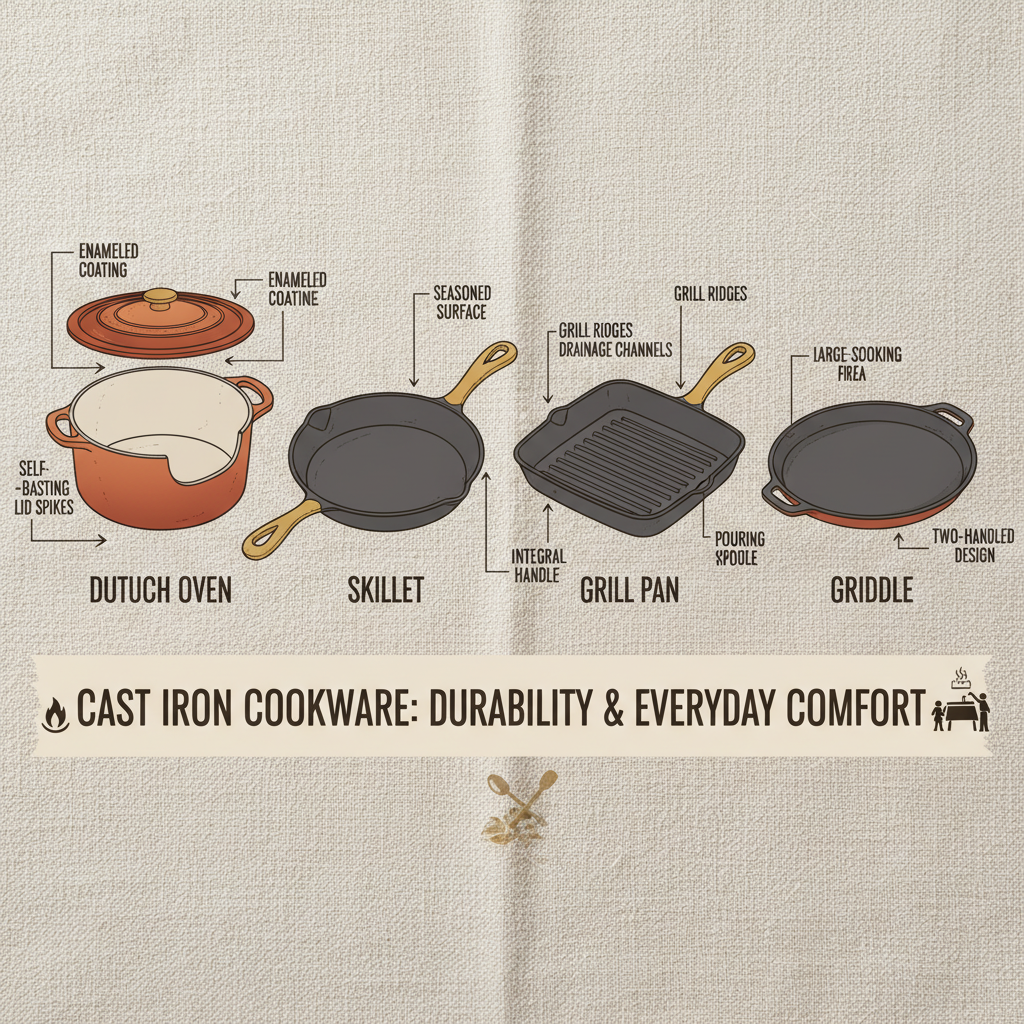
Navigating the complexities of international trade, quality control, and efficient distribution requires specialized expertise. Finding reliable cast iron cookware wholesale distributors enables businesses to access a wide range of products, from skillets and Dutch ovens to griddles and cookware sets, without the substantial investment in manufacturing and supply chain infrastructure. This allows them to focus on their core competencies: marketing, sales, and customer service.
Introduction to cast iron cookware wholesale distributors
Cast iron cookware wholesale distributors serve as the vital link between manufacturers and businesses seeking to stock or utilize cast iron products. They specialize in sourcing, warehousing, and distributing large volumes of cast iron cookware, offering competitive pricing and streamlined logistics. These distributors cater to a diverse clientele, including retailers, restaurants, hospitality businesses, and even other manufacturers who incorporate cast iron components into their own products.
A key aspect of successful cast iron cookware wholesale distribution involves a deep understanding of the market trends, quality standards, and the evolving needs of customers. Distributors must be adept at managing inventory, negotiating favorable terms with manufacturers, and ensuring timely delivery of goods. Effective distributors also provide value-added services, such as product customization, branding options, and technical support.
Defining Cast Iron Cookware Wholesale Distributors
A cast iron cookware wholesale distributor is a company that purchases cast iron cookware in bulk directly from manufacturers, or through import/export channels, and then resells it to other businesses at a reduced price. Unlike retail businesses that sell directly to consumers, wholesalers focus on business-to-business (B2B) transactions. They typically do not sell individual pieces to the public but rather cater to large orders from retailers, restaurants, and online marketplaces.
These distributors handle the complexities of sourcing, quality control, warehousing, and logistics, allowing their clients to focus on their core business operations. A good wholesale distributor will provide detailed product specifications, images, and potentially even sample products for evaluation. They are often experts in import/export regulations and can facilitate smooth international transactions.
The connection to modern industry is readily apparent as the demand for durable, high-performance cookware continues to increase. Wholesale distributors are integral to supporting the growth of businesses that rely on cast iron, ensuring a consistent supply chain and competitive pricing. They contribute to the accessibility of this traditional cookware in a modern, globalized marketplace.
Key Characteristics of Reliable Distributors
Reliable cast iron cookware wholesale distributors possess several key characteristics that set them apart. First, they maintain strong relationships with reputable manufacturers, ensuring access to high-quality products. Secondly, they implement rigorous quality control procedures to verify that each shipment meets required standards. This includes inspecting for defects, ensuring proper seasoning, and validating material composition.
Thirdly, a reliable distributor offers competitive pricing and flexible payment terms. They understand the importance of cost-effectiveness for their clients and strive to provide the best possible value. Fourthly, they possess efficient logistics capabilities, enabling them to fulfill orders promptly and accurately. This includes maintaining adequate inventory levels and utilizing reliable shipping methods.
Finally, excellent customer service is paramount. Responsive and knowledgeable support staff can address inquiries, resolve issues, and provide valuable assistance. This builds trust and fosters long-term partnerships. Distributors who invest in these characteristics are best positioned to thrive in a competitive market.
Global Reach and Supply Chain Efficiency
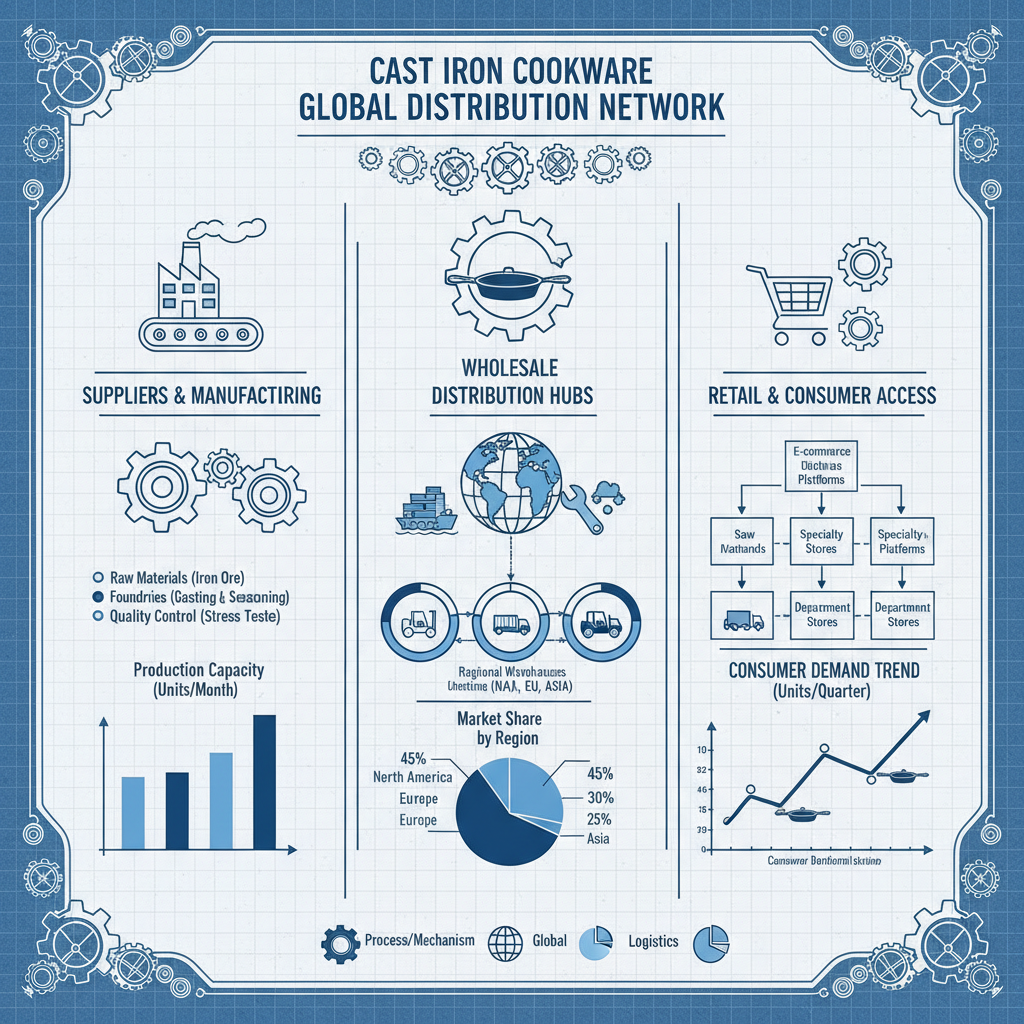
The effectiveness of cast iron cookware wholesale distributors is deeply intertwined with their global reach and the efficiency of their supply chains. Many distributors source their products from foundries in China, India, and other countries with established cast iron manufacturing capabilities. Successfully navigating international trade requires expertise in import/export regulations, customs procedures, and currency exchange rates.
Efficient supply chain management encompasses everything from raw material sourcing to final delivery. This includes optimizing transportation routes, minimizing lead times, and maintaining sufficient inventory levels to meet demand. Distributors often utilize sophisticated inventory management systems and collaborate with logistics providers to ensure smooth and timely delivery of goods.
Cast Iron Cookware Wholesale Distributor Performance Metrics
Applications Across Industries
Cast iron cookware is remarkably versatile and finds applications across a wide range of industries. The restaurant industry is a major consumer, utilizing cast iron for its durability, heat retention, and ability to impart unique flavors to food. Hotels and resorts often equip their in-room kitchens or banquet facilities with cast iron cookware.
Retailers, both brick-and-mortar and online, stock cast iron cookware to meet consumer demand for high-quality, long-lasting cooking tools. Furthermore, manufacturers of outdoor cooking equipment, such as grills and smokers, incorporate cast iron components into their products. Even specialized industries, like blacksmithing and metalworking, may utilize cast iron wholesale distributors for raw materials.
Advantages of Partnering with Distributors
Partnering with reputable cast iron cookware wholesale distributors offers several significant advantages. Businesses can benefit from reduced costs due to bulk purchasing discounts, eliminating the need for significant upfront investment in manufacturing. They gain access to a wide range of products and styles, catering to diverse customer preferences.
Distributors also handle the complexities of logistics, including warehousing, shipping, and customs clearance, freeing up businesses to focus on their core competencies. This leads to increased efficiency, reduced overhead costs, and improved customer satisfaction. Furthermore, established distributors often have strong relationships with manufacturers, ensuring a consistent supply of high-quality products.
The ability to scale quickly is another major benefit. As demand grows, distributors can readily accommodate larger orders without requiring businesses to expand their own infrastructure. This flexibility is crucial for businesses experiencing rapid growth or seasonal fluctuations in demand.
Future Trends in Cast Iron Distribution
The future of cast iron cookware wholesale distribution is poised for innovation and disruption. Increasingly, distributors are embracing digital technologies to streamline their operations, improve customer service, and enhance supply chain visibility. This includes implementing e-commerce platforms, utilizing data analytics to optimize inventory management, and employing cloud-based logistics solutions.
Sustainability is also becoming a key trend, with distributors seeking to source ethically produced cast iron and minimize their environmental impact. This includes prioritizing suppliers who utilize eco-friendly manufacturing processes and investing in sustainable packaging materials. The rise of direct-to-consumer (DTC) brands is also influencing the distribution landscape, with some distributors offering white-labeling or private-labeling services.
Finally, advancements in materials science may lead to the development of new cast iron alloys with enhanced properties, such as improved heat conductivity or lighter weight. Distributors who stay abreast of these trends and adapt their strategies accordingly will be best positioned to succeed in the evolving market.
Summary of Key Factors in Cast Iron Cookware Wholesale Distributor Selection
| Manufacturer Relationships |
Quality Control Procedures |
Logistics & Shipping |
Customer Support Quality |
| Strong established relationships with multiple manufacturers |
Rigorous inspection processes at multiple stages |
Efficient and cost-effective shipping options globally |
Responsive and knowledgeable customer service team |
| Ability to source exclusive or custom products |
Compliance with relevant safety and quality standards |
Real-time tracking and delivery updates |
Proactive communication and problem-solving |
| Negotiated favorable pricing and payment terms |
Material testing and verification of specifications |
Warehousing and inventory management capabilities |
Multilingual support for international clients |
| Transparency in sourcing and manufacturing processes |
Documentation of quality control results |
Insurance coverage for shipments |
Dedicated account managers for key clients |
| Commitment to ethical and sustainable sourcing |
Compliance with international trade regulations |
Customs clearance assistance |
Technical support for product-related inquiries |
| Long-term partnerships with key suppliers |
Continuous improvement of quality control processes |
Optimized logistics network for cost savings |
Training for clients on product usage and care |
FAQS
The MOQ varies significantly between distributors, depending on their size, the specific product, and the manufacturer they work with. Generally, you can expect MOQs to range from a few hundred pieces per item to several thousand. Some distributors may offer lower MOQs for smaller businesses, but this often comes with a higher per-unit price. It’s crucial to clarify the MOQ before placing an order to ensure it aligns with your business needs and inventory capacity. Negotiating based on order volume and establishing a long-term partnership can also help reduce MOQs.
Lead times can vary considerably depending on several factors, including the distributor's location, the manufacturer's production schedule, and the shipping method. Typically, you can expect lead times to range from 4-12 weeks for standard items. Custom orders or items requiring specific finishes or packaging may take longer. Factors like customs clearance and potential delays in transportation can also impact delivery times. Communicating your desired delivery date upfront and requesting regular updates can help ensure timely arrival.
Reputable distributors implement a multi-stage quality control process. This typically includes inspection of raw materials, in-process quality checks during manufacturing, and final inspection of finished goods. Key areas of focus include checking for defects like cracks or porosity, verifying proper seasoning, ensuring dimensional accuracy, and validating material composition. They often work with third-party testing labs to verify compliance with relevant safety standards and regulations. Requesting a quality control report before placing a large order can provide peace of mind.
Common shipping options include sea freight, air freight, and express courier services. Sea freight is the most cost-effective option for large shipments, but it also has the longest transit time. Air freight is faster but more expensive. Express courier services are ideal for small, urgent orders. Distributors typically handle the logistics of arranging shipping, including customs clearance and insurance. It’s important to discuss shipping costs and insurance options upfront to avoid unexpected expenses. Incoterms should be clearly defined to specify responsibilities for shipping costs and risks.
Many distributors offer customization options, such as private labeling, custom packaging, and even modifications to the product design. Private labeling allows you to brand the cookware with your own logo. Custom packaging can enhance your brand identity and improve the presentation of your products. More extensive customization, such as altering the shape or size of the cookware, may require a larger minimum order quantity and longer lead times. Discussing your customization requirements with the distributor upfront is essential.
Common payment terms include letter of credit (LC), telegraphic transfer (TT), and credit terms (net 30, net 60, etc.). LC is a secure payment method often used for international transactions. TT requires upfront payment, usually a percentage as a deposit and the balance before shipment. Credit terms allow you to pay for the goods after receiving them, but they typically require a credit check and a strong business relationship. Negotiating favorable payment terms can improve your cash flow.
Conclusion
In conclusion, cast iron cookware wholesale distributors are indispensable partners for businesses seeking to source high-quality, durable, and versatile cooking tools. By understanding the key characteristics of reliable distributors, optimizing supply chain efficiency, and staying abreast of emerging trends, businesses can leverage these partnerships to gain a competitive edge in the global market. The ability to access a consistent supply of cast iron cookware at competitive prices is essential for meeting the growing demand from consumers and professionals alike.
Looking ahead, the future of cast iron distribution will be shaped by digital transformation, sustainability initiatives, and evolving customer preferences. Embracing these changes and fostering strong relationships with reputable distributors will be crucial for long-term success. For businesses looking to explore wholesale opportunities, we invite you to visit our website and discover our extensive range of cast iron cookware and dedicated distribution services.