Elevate Your Outdoors with Delicious Baking in a Dutch Oven Camping
Baking in a Dutch Oven Camping: A Complete Guide
Are you looking to elevate your camping culinary experience? Baking in a dutch oven while camping is a fantastic way to create delicious, hearty meals outdoors. From savory cobblers to perfectly browned breads, a dutch oven opens up a world of possibilities beyond traditional campfire cooking. This guide will cover everything you need to know, from choosing the right dutch oven to mastering essential techniques, and enjoying amazing results under the stars. Get ready to impress your fellow campers with your newfound baking skills!
Choosing the Right Dutch Oven for Camping
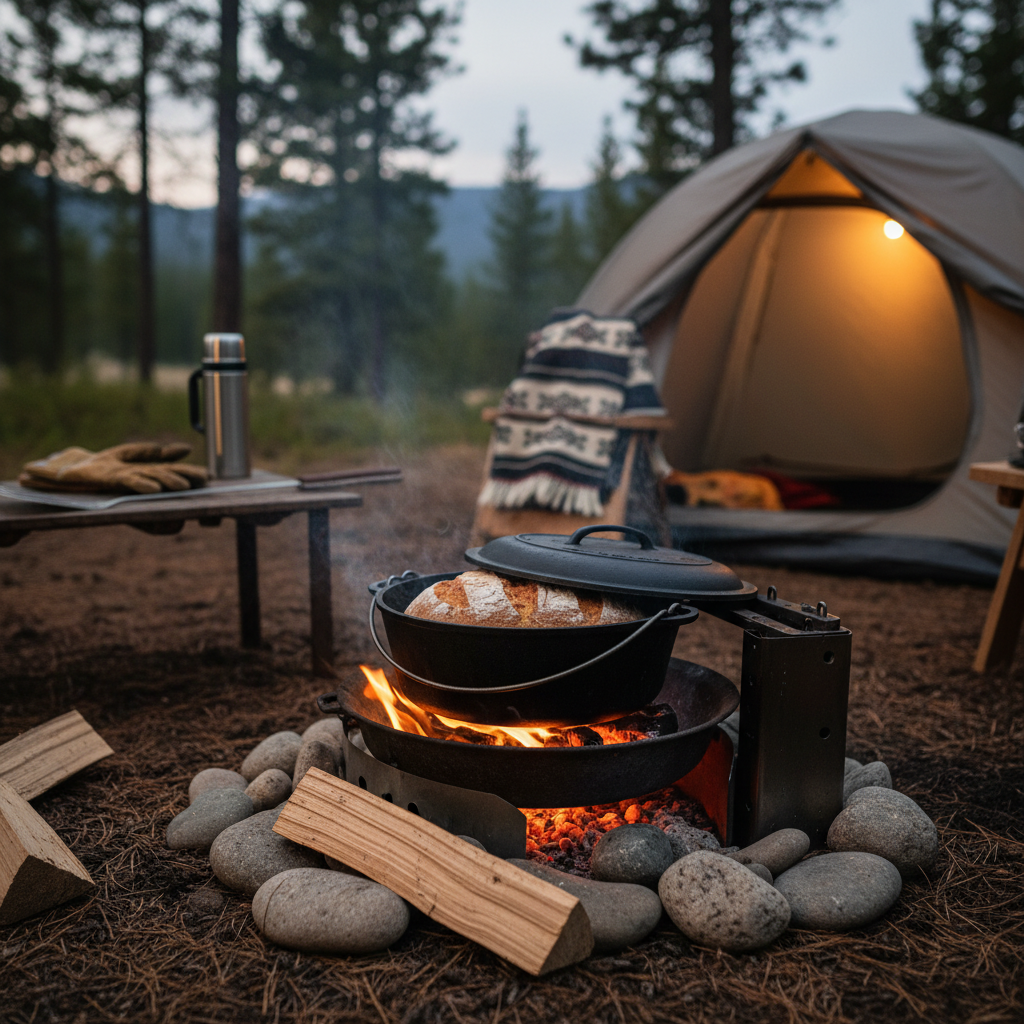
Selecting the ideal dutch oven is the first step toward successful campfire baking. Several factors come into play, including material, size, and features. Cast iron is the gold standard for dutch ovens due to its exceptional heat retention and even heating capabilities. While heavier than other options, cast iron provides consistent temperatures perfect for baking. Consider the size based on your group size; a 12-inch dutch oven is a versatile choice for families, while a smaller 8-inch oven is ideal for solo campers or couples. Look for a dutch oven with legs for easy placement over coals and a tight-fitting lid to trap heat and moisture. ZD Cookware offers a range of high-quality dutch ovens designed specifically for outdoor cooking.
Key Considerations: Material (cast iron preferred), size (8", 10", 12" most common), legs for coal placement, tight-fitting lid for heat retention.
Mastering the Art of Heat Control
Unlike oven baking, campfire baking requires careful heat management. The key is to distribute coals evenly around and on top of the dutch oven. A general rule of thumb is a 2:1 ratio of coals below to coals on top – for example, 16 coals underneath and 8 on top for a 12-inch dutch oven. However, this ratio may vary depending on the recipe and desired temperature. Experimentation is key! Use a coal calculator (many are available online) as a starting point, but be prepared to adjust based on your observations. Rotating the dutch oven and lid periodically ensures even baking. Remember that maintaining a consistent temperature is crucial for avoiding burnt bottoms or undercooked centers.
Heat Control Tips:
• Use a 2:1 ratio of coals below to coals on top as a starting point.
• Rotate the dutch oven and lid for even baking.
• Adjust coal placement to increase or decrease heat.
• Monitor the cooking process closely.
Essential Baking Recipes for Dutch Oven Camping
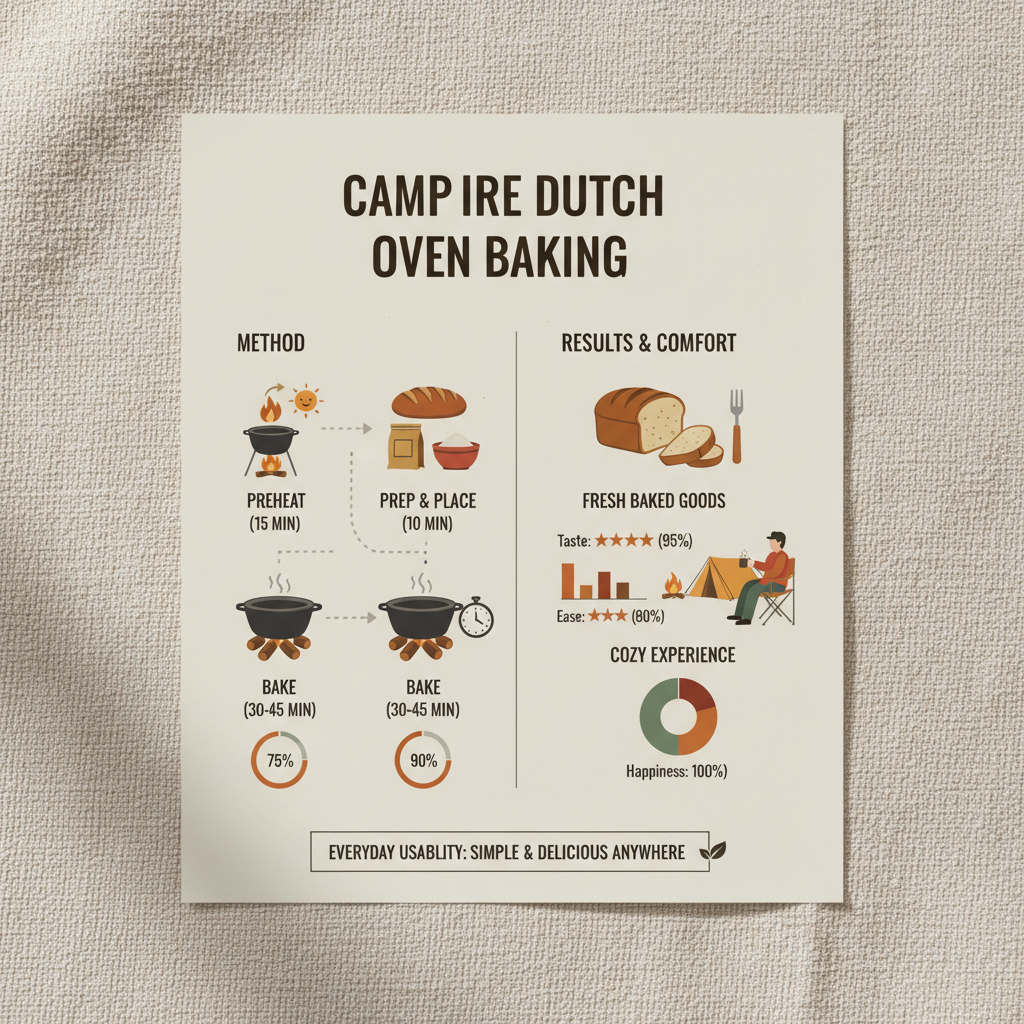
Now for the fun part! Here are a few classic recipes to get you started with baking in a dutch oven camping. Cobblers are incredibly easy and satisfying, requiring minimal ingredients and effort. Biscuits are another crowd-pleaser, perfect for breakfast or alongside a hearty stew. And don't forget about bread – a freshly baked loaf over the campfire is a truly unforgettable experience. Experiment with different flavors and fillings to create your signature camping baked goods.
Tips for Preventing Sticking and Ensuring Easy Cleanup
Preventing food from sticking to your dutch oven is essential for a stress-free baking experience. Thoroughly seasoning your dutch oven before use is crucial. Rubbing a thin layer of oil (vegetable, canola, or shortening) into the cast iron and baking it at a high temperature creates a natural non-stick surface. Always grease your dutch oven well before adding batter or dough. Using parchment paper liners can also help prevent sticking, especially for delicate baked goods. For cleanup, avoid using soap, as it can strip the seasoning. Instead, scrape out any remaining food and use hot water and a stiff brush.
ZD Cookware: Your Partner in Campfire Baking
At ZD Cookware, we're passionate about providing high-quality dutch ovens and accessories to enhance your outdoor cooking adventures. Our dutch ovens are crafted from durable cast iron and designed for even heat distribution and long-lasting performance. We also offer a variety of helpful resources, including recipes and tips, to help you master the art of campfire baking. Explore our collection today and start creating delicious memories under the stars!
Conclusion: Embrace the Joy of Campfire Baking
Baking in a dutch oven camping is a rewarding experience that adds a touch of comfort and deliciousness to your outdoor adventures. With the right equipment, techniques, and recipes, you can create unforgettable meals and memories. So, gather your ingredients, fire up your coals, and get ready to enjoy the magic of campfire baking!
Frequently Asked Questions (FAQs)
What is the best type of fuel to use for campfire baking?
Charcoal briquettes are the most consistent and predictable fuel source for campfire baking. They provide a stable heat output and are easy to control. Hardwood lump charcoal can also be used, but it burns faster and requires more attention. Avoid using softwood (like pine) as it creates a lot of smoke and doesn't produce consistent heat. Make sure to use a sufficient amount of fuel to maintain the desired temperature throughout the baking process.
How do I prevent my dutch oven from rusting?
Rust is the enemy of cast iron! After each use, clean your dutch oven thoroughly with hot water and a stiff brush. Dry it completely, then lightly coat it with cooking oil. Store your dutch oven in a dry place. If rust does appear, scrub it off with steel wool and re-season the oven. Regular seasoning is the best defense against rust.
Can I use a lid lifter to handle a hot dutch oven?
Absolutely! A lid lifter is an essential tool for safely handling a hot dutch oven lid. The lid gets incredibly hot, and attempting to lift it with your bare hands or a cloth can result in severe burns. A lid lifter provides a secure grip and keeps your hands at a safe distance.
What are some good resources for dutch oven camping recipes?
There are numerous websites and cookbooks dedicated to dutch oven cooking! Check out websites like ZD Cookware, or search online for "dutch oven camping recipes" to find a wealth of inspiration. Many camping forums and communities also share recipes and tips.
-
Mastering Outdoor Cooking with a Portable Dutch Oven GuideNewsApr.16,2026
-
Master Outdoor Cooking with the Oval Cast Iron Camp Oven GuideNewsApr.09,2026
-
Unlocking Flavorful Adventures with Outdoor Cooking with a Dutch OvenNewsApr.07,2026
-
Elevate Your Outdoor Cooking With A Premium Outdoor Cast Iron OvenNewsApr.04,2026
-
Discover the Benefits of a Cast Camp Oven for Outdoor CookingNewsMar.31,2026
-
Maximize Your Outdoor Cooking with a Camping Tripod and Dutch OvenNewsMar.28,2026